
Plant Encyclopedia

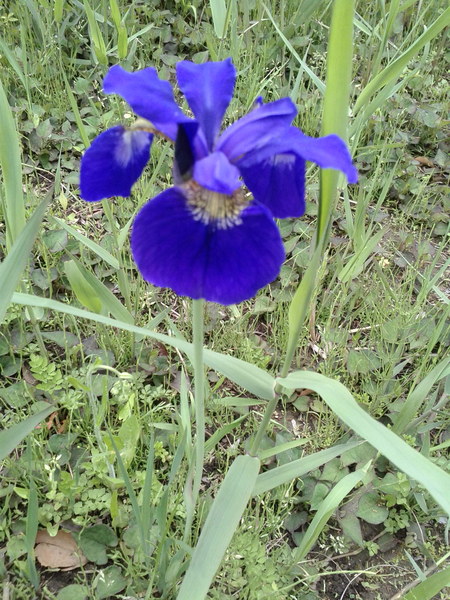
Iris setosa var. setosa ("Hiogiayame")
Japanese name: ヒオウギアヤメ (檜扇菖蒲)
Scientific name: Iris setosa var. setosa
[Overview]
A perennial growing in lowlands in the north and in alpine wetlands on Honshu.
It has a thick rhizome.
The leaves are alternate in two rows, sword-shaped, 1.5–3 cm wide, with an inconspicuous midrib.
The flower stalks branch, reach about 30–90 cm in height, and bear several flowers at the tip.
The flowers are purple, about 8 cm across, with 6 tepals; the 3 outer tepals are broadly ovate and have a yellow and purple net-like pattern at the base.
The 3 inner tepals are small, projection-like, about 1 cm long, and inconspicuous.
The fruit is an elliptical capsule.
[Cultivation]
Propagate by division or from seed.
It prefers sun and is not particular about location as long as it does not become extremely dry, but in warm regions it is best to let it spend the summer in cool partial shade.
For potted plants, water thoroughly when the soil surface dries.
For plants in the ground, water if sunny weather continues and the soil dries out.
Even during dormancy, water enough to keep it from drying out completely.
Apply organic fertilizer or liquid fertilizer three times: in early spring when it sprouts, after flowering, and in autumn.
If you are not collecting seed, cutting the flowers off after they finish keeps the plant from becoming exhausted.
There are almost no pests or diseases, but the rice stem borer sometimes infests it.
[Notes]
The Japanese name derives from the flowers resembling those of the Ayame and the leaves resembling those of the Hiogi.
Details
Translated from our Japanese encyclopedia. If anything differs, the Japanese page is correct.