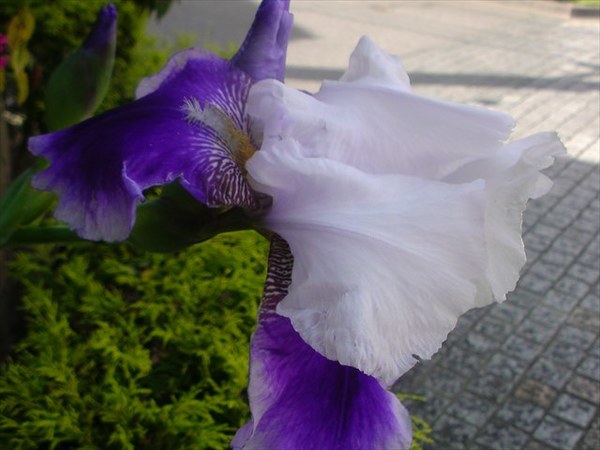
Japanese name: ジャーマンアイリス Scientific name:Iris Tall Bearded Group
[Overview]
Similar to the German iris, but a group of garden cultivars created through complex crossing of European irises.
The large, round rhizomes spread by creeping horizontally along the ground surface.
Flower stalks 70 cm or taller are common, but there are also dwarf cultivars about 20 cm tall.
One flower stalk bears about 8 flowers, and the flower stalk is about 20 cm.
The flowers come in a wide range of colors.
There are 6 tepals; the 3 outer tepals hang down and have brush-like protrusions at the base.
The inner tepals stand upright.
[Cultivation]
Propagate by division.
It prefers a sunny, well-drained place.
Heat and humidity or insufficient sunlight cause disease, so care is needed.
For potted plants, water thoroughly when the soil surface dries.
For plants in the garden, watering is not necessary unless it becomes very dry.
It is better kept on the dry side in summer.
In early spring and autumn, apply a small amount of slow-release fertilizer around the plant.
Crowded buds cause disease and poor flowering, so repot potted plants every year and plants in the ground once every 2–3 years.
Pests and diseases include soft rot and aphids.