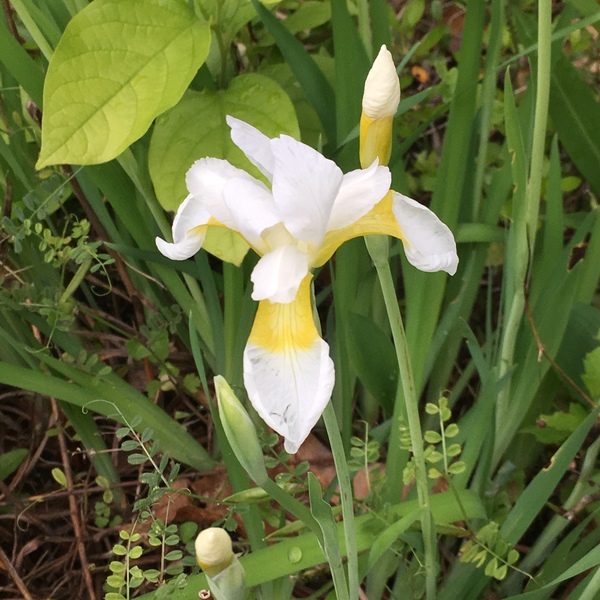
Japanese name: ダッチアイリス Scientific name:Iris Dutch Group
[Overview]
A group of garden cultivars bred in the Netherlands in the 19th century from Iris xiphium and others.
It has large spindle-shaped bulbs.
The leaves die back in summer and the plant goes dormant.
The flower stalk is about 50–60 cm tall.
Each flower stalk bears several flowers, which are 10 cm or more across.
There are 6 tepals; the 3 outer tepals hang down and the inner tepals stand upright.
[Cultivation]
Propagate by dividing the bulbs.
It prefers a sunny, well-drained place.
For potted plants, water thoroughly when the soil surface dries; for plants in the ground, rainfall is sufficient.
Apply base fertilizer, and also slow-release fertilizer until before flowering.
If lifting the bulbs, dig them up when the leaves begin to turn yellow and wither, then wash, disinfect and dry them, and store them in the shade.
Crowded shoots cause disease and poor flowering, so repot potted plants every year and plants in the ground once every 2–3 years.
Pests and diseases include soft rot and aphids.