
Plant Encyclopedia

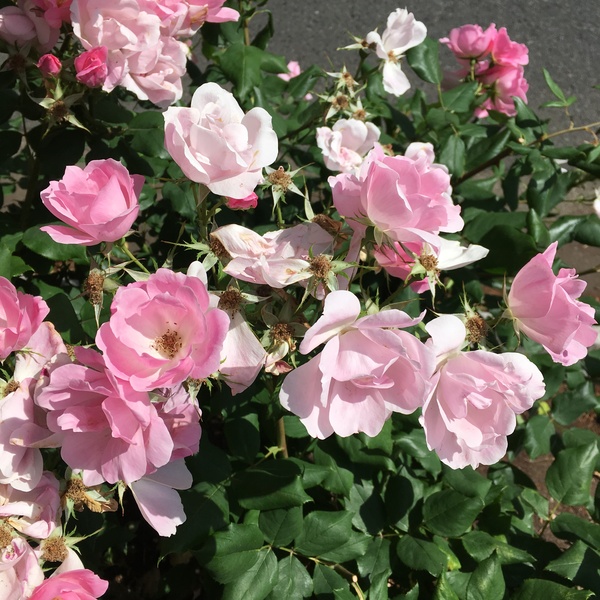
Rosa (genus)
Japanese name: バラ(シュラブ)
Scientific name: Rosa
[Overview]
A type of garden rose cultivar that grows as a semi-climber.
Depending on how it is trained, it can be grown as a climbing rose or as a bush.
Among modern roses it includes the shrub (modern shrub) group, and among old roses it includes many groups, beginning with the Damask group.
Many have thorns on the trunk, branches and leaf axes.
The leaves are alternate and odd-pinnately compound, with serrated leaflet margins.
Some are repeat-blooming and flower from spring to autumn, some bloom once, only in spring, and some bloom again in spring and autumn.
The size, shape and color of the flowers vary by cultivar.
Some flowers are fragrant.
[Cultivation]
Propagate by cuttings or grafting.
It prefers a sunny, well-drained, well-ventilated, fertile soil.
Avoid dry places and places exposed to strong afternoon sun.
The optimum temperature for growth is 20–25 °C; growth declines above 30 °C, and in direct midsummer sun the leaf temperature rises and weakens the plant.
In midsummer, place potted plants where they receive sun only in the morning, or provide shade.
Plants in the ground may be planted where they will sit in the shade of deciduous trees.
For potted plants, water thoroughly when the soil surface dries; for plants in the ground, rainfall is sufficient unless summer brings a long spell of sunny weather and the soil becomes dry.
Apply organic fertilizer in winter, and apply slow-release fertilizer after spring flowering and after summer pruning.
When training as a climber, tie in the shoots (new growth) and let them extend; when training as a bush, pinching the shoot tips once they have grown to a certain length strengthens them.
When deadheading, cut off about 1/2–1/3 of the flower stem after the flowers have finished.
When treated as a climbing rose, prune around February by cutting old and diseased branches off at the base so that they are replaced by new shoots; when trained as a bush, prune to 2/3 of the original height just above a strong outward-facing bud so that the plant takes on a cup shape.
If shoots emerge from the rootstock, remove them as early as possible.
Pests and diseases include black spot, powdery mildew, aphids, rose sawflies and longhorn beetles.
Details
Translated from our Japanese encyclopedia. If anything differs, the Japanese page is correct.