EVERGREEN

Plant Encyclopedia

Magnolia liliiflora

Magnolia liliiflora (Mulan magnolia, "Mokuren")

Japanese name: モクレン (木蓮、木蘭)
Scientific name: Magnolia liliiflora

Magnolia liliiflora

[Overview]
A deciduous shrub growing 3–4 m tall.
It is said to be native to China and has long been cultivated.
The bark is grayish white tinged with brown.
The leaves are alternate, obovate to ovate-obovate, with entire, slightly wavy margins.
The flowers open before the leaves emerge and continue to bloom after the leaves have appeared.
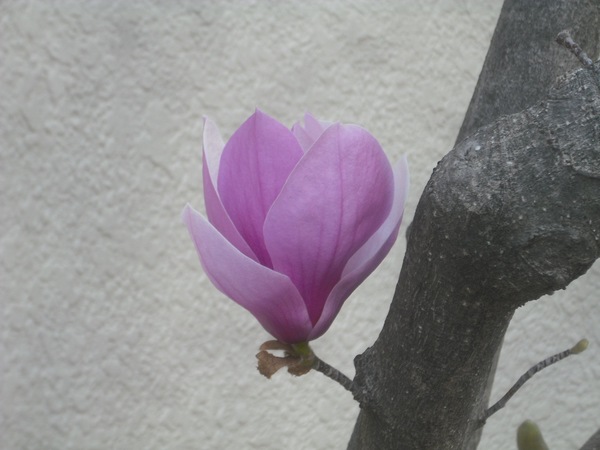
The flowers are about 10 cm across, held upright, and do not open very wide.
There are 6 tepals, dark purple on the outside and pale purple on the inside.
Because of the flower color, it is also called Shimokuren (purple magnolia).

[Cultivation]
Propagate from seed or by grafting.
When grown from seed, it can take 10 years or more to flower.
It prefers a sunny, well-drained site with deep soil.
Pests and diseases are relatively few.

Details

Names
English: Mulan magnolia, Tulip magnolia, Lily magnolia, mu-lan, woody orchid
Japanese: モクレン(木蓮、木蘭)、シモクレン(紫木蓮)、ハネズ、モクレンゲ
Life form
Shrub
Evergreen / deciduous
Deciduous
Leaf type
Broadleaf
Habit
Terrestrial
Planting (or sowing) season
January, February, March
Flowering season
April, May
Fruiting season
September
Distribution or origin
China
Growth form
Upright
Height
3000–4000 mm
Leaf shape
Simple leaf
Leaf arrangement
Alternate
Leaf margin
Entire
Inflorescence
Solitary
Number of petals
6
Flower color
Purple
Flower diameter
100
Leaf color
Green
Availability of seeds and plants
Low
Form sold
Seedlings
Propagation
Seed, Grafting
Sun exposure
Full sun
Soil needs
Required
Suitable uses
Bonsai, Cut flowers, Parks and gardens, Street trees
Pests
Scale insects, Longhorn beetles
Japan Flower Trade Code
21704

Translated from our Japanese encyclopedia. If anything differs, the Japanese page is correct.

Sponsored