
Plant Encyclopedia

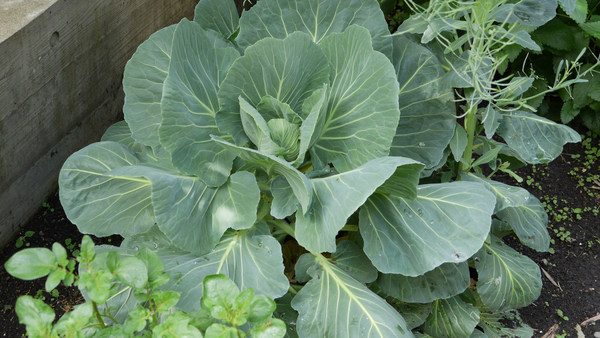
Brassica oleracea var. capitata ("Kyabetsu")
Japanese name: キャベツ
Scientific name: Brassica oleracea var. capitata
[Overview]
An annual to perennial.
It is broadly divided into groups such as the Copenhagen Market group, Nakano-wase group, autumn-sown mid-early group, Succession group, Aichi summer-sown group, Sapporo group, Nanbu group, Danish Ballhead group, Flat Dutch group, crinkled cabbage (Savoy cabbage) group and purple cabbage (red cabbage) group.
[History]
Native to the Mediterranean coast; seeds of wild cabbage have been found in Switzerland from the Neolithic period.
It was cultivated in ancient Greece around the 4th century BC.
It was later widely cultivated in Europe; at first it did not form heads, but it was later improved into head-forming types.
Heading cabbage was confirmed in southern Germany in the 12th century, and was introduced to America and China in the 17th century.
In Japan, in the early 18th century during the Edo period, Dutch traders brought a non-heading to semi-heading reddish-purple kale to Nagasaki, which was later improved into Habotan (ornamental kale).
Heading types were introduced in the first years of the Meiji era, and from the end of the Meiji era into the Showa era, uniquely Japanese cultivars came to be developed.
[Uses]
The leaves that have formed a head are eaten.
[Cultivation]
It prefers a cool climate.
It is sensitive to both dryness and excess moisture, so well-drained soil rich in organic matter is suitable.
After sowing, transplant once the plants have 2–3 true leaves.
Diseases and pests include viral diseases, clubroot, downy mildew, aphids, diamondback moths and cutworms.
Details
Translated from our Japanese encyclopedia. If anything differs, the Japanese page is correct.