
Plant Encyclopedia

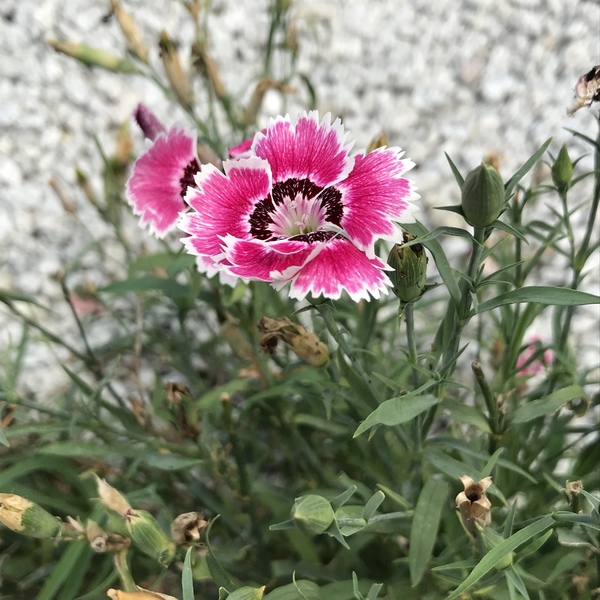
Dianthus (genus, "Daiansasu")
Japanese name: ダイアンサス
Scientific name: Dianthus
[Overview]
Of the cultivated plants of the genus Dianthus, those other than carnations are sold under the name dianthus.
They are perennials, but some are treated as annuals sown in autumn.
The leaves are simple and opposite, lanceolate to linear.
The flowers are 5-petaled or double, and the petal tips are finely cut.
The flower colors are varied, including white, pink, red, yellow and purple, and some are bicolored.
[Cultivation]
Propagate from seed, by division, or by cuttings of shoots.
It prefers a sunny, well-drained, airy place and dislikes heat and humidity.
Keep the soil neutral to slightly alkaline.
Keep it slightly on the dry side; for potted plants, water thoroughly after the soil has dried, and for plants in the ground, rainfall is sufficient.
Excess moisture causes root rot and disease.
During the growing season, apply slow-release fertilizer placed on the soil once a month.
There are no particular pests or diseases.
Details
Translated from our Japanese encyclopedia. If anything differs, the Japanese page is correct.