
Plant Encyclopedia

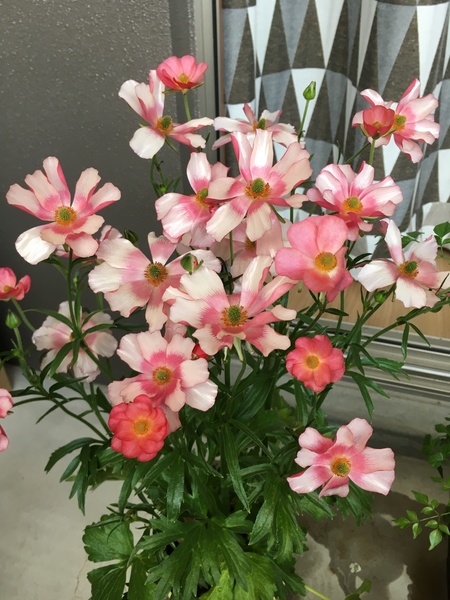
Ranunculus Rax Series
Japanese name: ラナンキュラス ラックス シリーズ
Scientific name: Ranunculus Rax Series
[Overview]
A perennial 50–60 cm tall.
It has small tuberous roots underground.
The leaves include basal leaves and stem leaves.
The flowers are single to semi-double, come in a wide range of colors, and have a shining luster.
[History]
A series bred by Aya Engei through interspecific hybridization.
[Cultivation]
Propagate by dividing the bulbs.
If lifting the bulbs, dig them up after all the leaves have died back, dry them in the shade, and store them dry in a cool, shaded place.
Bulbs rot easily if planted and watered right away, so before planting, place them on moist sand to let them absorb water gradually, and plant them after confirming that new roots have begun to grow.
In warm regions it can overwinter outdoors, but in cold regions protect it from frost.
It prefers sunny, well-drained, moisture-retentive, well-ventilated soil rich in organic matter.
It dislikes acidic soil.
For potted plants, water thoroughly from autumn to spring when the soil surface dries; when the leaves begin to turn yellow, gradually keep the soil drier, and stop watering during dormancy.
For plants in the ground, rainfall is sufficient.
Apply organic fertilizer as base fertilizer, and apply liquid fertilizer during the flowering period.
Stop fertilizing during dormancy.
Pests and diseases include gray mold and aphids.
Details
Translated from our Japanese encyclopedia. If anything differs, the Japanese page is correct.