[Overview]
Deciduous shrubs.
They are flowers representative of autumn in Japan and are known as one of the Seven Herbs of Autumn.
About 40 species are known in the wild, but in Japan Yama-hagi is the representative species.
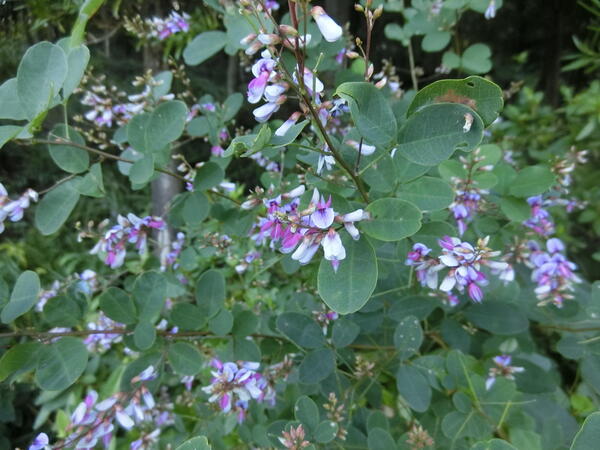
The leaves are alternate and compound, consisting of 3 leaflets, and the leaflets are entire.
The stipules are small and lanceolate.
The flowers are pea-shaped and are borne spirally in pairs on compound racemes in the leaf axils.
The flowers are often reddish purple, but some species are white or cream-colored.
The pods do not split open even when ripe.
[Cultivation]
It likes sun and is easy to grow, thriving even in poor or dry soil as long as the soil is not too wet.
It is hardy to cold, but most of the aboveground part dies back in winter, so cut it back to ground level so that new branches grow the following year.
Transplanting is easy as long as it is done while the plant is leafless.
[Notes]
In the Man'yoshu, hagi is the most frequently praised plant in poems, appearing in as many as 141.
The kanji character 萩 for hagi was created in Japan during the Heian period.