EVERGREEN

Plant Encyclopedia

Amygdalus persica

Amygdalus persica (peach, "Momo")

Japanese name: モモ (桃)
Scientific name: Amygdalus persica

Amygdalus persica

[Overview]
A small deciduous tree.
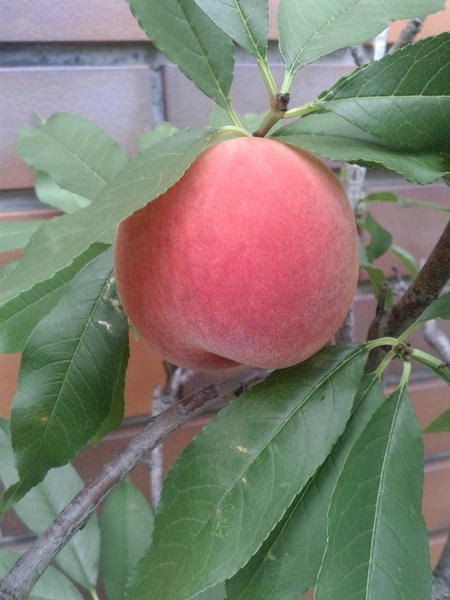
Leaves are simple and alternate, elliptic-lanceolate and about 8–15 cm long, with coarse serrations on the margin.
The petiole is 1–1.5 cm long, and there are glandular dots at the base of the leaf.
Flowers are usually solitary.
They are usually 5-petaled, but some cultivars are double, and the flower color varies among white, pink and red.
They often bloom before the leaves unfold, and flowering peaches are displayed for the Peach Festival on March 3.
The fruit of cultivars grown as fruit trees is large and subglobose with a protruding tip, and the flesh is soft and juicy.
The surface of the fruit is covered with hairs.

[History]
Like the Ume, it came from China in ancient times, and its name appears in the Kojiki and the Man'yoshu.

[Cultivation]
It prefers well-drained, sunny land with deep, workable soil.
Propagate by grafting, using cleft grafting in March or bud grafting in August–September.
Pests and diseases are very numerous, and care is needed.

Details

Names
English: peach
Japanese: モモ(桃)
Life form
Small tree
Evergreen / deciduous
Deciduous
Leaf type
Broadleaf
Habit
Terrestrial
Planting (or sowing) season
January, February, March, November, December
Flowering season
March, April
Fruiting season
July, August
Leaf shape
Simple leaf (unlobed)
Leaf arrangement
Alternate
Leaf margin
Serrate
Inflorescence
Solitary
Flower color
White, Pink, Red, Multicolor
Fruit color
Yellow, Red
Leaf color
Green
Availability of seeds and plants
Low
Form sold
Seedlings
Propagation
Grafting
Sun exposure
Full sun
Water needs
Moderate
Soil needs
Required
Suitable uses
Bonsai, Potted plant, Cut flowers, Parks and gardens, Container, Balcony
Hardiness zone
6b–11b
Taste
Sweetness, Sourness
Edible parts
Fruit
Uses
Edible
24 solar terms and 72 pentads
Awakening of Insects (second pentad)
Special days
Momo no Sekku
Japanese culture
Its name appears in the Kojiki and the Man'yoshu.
Japan Flower Trade Code
18829

Translated from our Japanese encyclopedia. If anything differs, the Japanese page is correct.

Sponsored