
Plant Encyclopedia

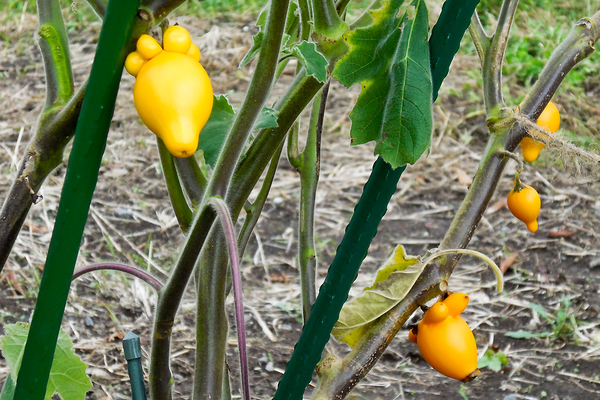
Solanum mammosum (nipplefruit, "Tsunonasu")
Japanese name: ツノナス (角茄子)
Scientific name: Solanum mammosum
[Overview]
A perennial or subshrub 1–2 m tall, but because it is susceptible to cold and frost, it is treated as an annual.
The whole plant is covered with fine hairs, and there are sharp prickles on the stems and leaf veins, though thornless strains are also cultivated.
The leaves are simple and alternate, broadly ovate with irregular lobes, and the veins are conspicuous.
Several flowers grow in cymes emerging from the leaf axils; the corolla is blue-purple and star-shaped with 5 lobes, and the corolla lobes curve strongly backward.
The fruit is about 5 cm long, with a distinctive shape having protrusions at the tip and base, and ripens yellow.
[Cultivation]
Propagate from seed.
The optimum germination temperature is high, 20–25°C, but the fruit takes time to color after setting, so if sowing is late, the plant may die before the fruit colors.
It prefers fertile soil that is sunny, well drained, and moisture-retentive.
Grow it in a large pot of size 10 or larger, or in a large planter.
Water thoroughly when the soil surface dries.
Apply slow-release fertilizer during the growing period until the fruit ripens.
Fertilizer high in nitrogen produces only leaves and makes flowering difficult, so use one with equal amounts of the three components or with less nitrogen.
Pinch in early summer, and when side shoots grow, leave only a few and cut off the rest to control the number of fruits per plant.
Once fruit has set, removing the leaves that cast shade on the fruit lets it receive plenty of sun and color well.
The plant becomes tall, so set up a stake.
Pests and diseases include powdery mildew, aphids, armyworms, and spider mites.
Details
Japanese: ツノナス(角茄子)、フォックスフェイス、カナリアナス、キツネナス(狐茄子)
Translated from our Japanese encyclopedia. If anything differs, the Japanese page is correct.