[Overview]
An annual to perennial.
The leaves include basal leaves and leaves arranged alternately on the stem.
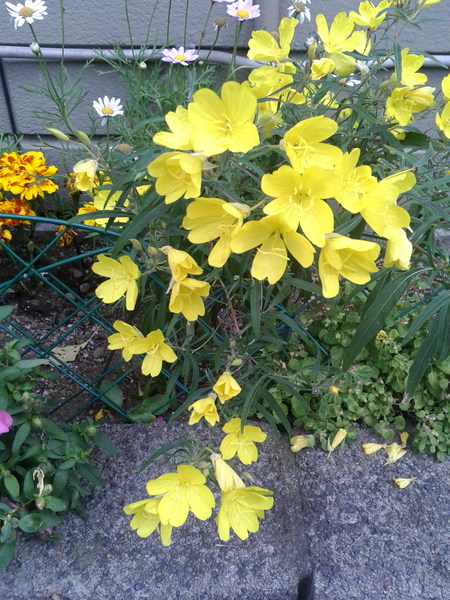
The flowers are 4-petaled and are borne in racemes at the stem tips or singly.
The anthers are attached to the filaments in a T-shape.
Most bloom in the evening and wilt the next morning, but some open during the day.
The fruit is a capsule.
[Cultivation]
Propagate from seed, by division, or by shoot cuttings.
It dislikes transplanting, so sow directly where it will grow, or sow in pots and transplant while the seedlings are young.
It prefers sunny, well-drained soil.
For potted plants, water thoroughly when the soil surface dries; for plants in the ground, rainfall is sufficient unless summer brings a long spell of sunny weather and the soil becomes severely dry.
Excess fertilizer produces only leaves, so use it sparingly; for potted plants, in addition to basal fertilizer, place a small amount of slow-release chemical fertilizer on the soil in spring.
For plants in the ground, no fertilizer is particularly necessary.
There are no particular pests or diseases.