
Plant Encyclopedia

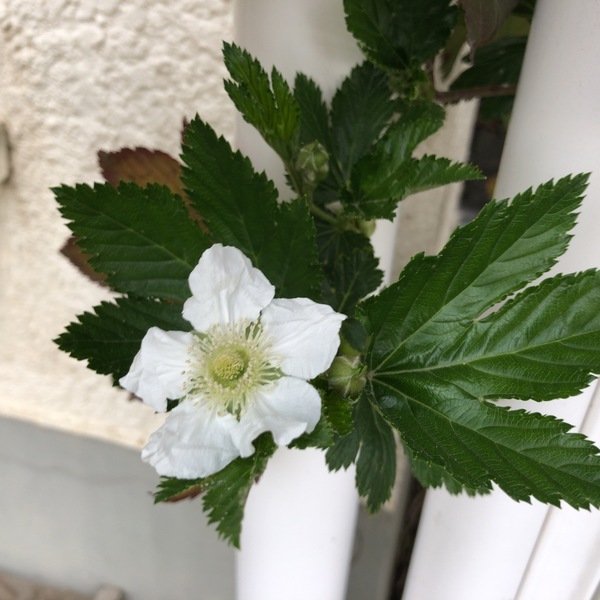
Rubus (genus)
Japanese name: ブラックベリー
Scientific name: Rubus
[Overview]
A deciduous shrub 1.5–3 m tall.
The name refers to Seiyo-yabuichigo itself, but most plants in trade are hybrids, including other species, so it is treated as a collective name.
The branches are erect or vine-like and have thorns.
Leaves are alternate and odd-pinnately compound.
The flowers are borne in corymbs or racemes and are white with 5 petals.
Flowering proceeds from the base of the inflorescence toward the tip.
Even when ripe, the fruit comes off with the receptacle still attached, so it keeps its shape well.
A group called dewberries, with creeping branches and cyme-like inflorescences in which flowering proceeds from the center outward, is also sold as blackberries.
The fruit is not only black but can also be red.
[History]
Improved in the late 19th century, most cultivars come from the United States.
[Uses]
The fruit is sweet and sour with a pleasant aroma, and is eaten fresh or made into processed products such as jam.
[Cultivation]
Propagate by division, cuttings, layering or root cuttings.
It prefers a sunny, well-drained, fertile soil that retains water well.
For potted plants, water thoroughly when the soil surface dries; for plants in the ground, rainfall is sufficient unless summer brings a long sunny spell and the soil dries out.
Apply organic fertilizer in winter, and quick-acting chemical fertilizer after flowering and in autumn.
Prune in winter: from the newly grown branches that will bear fruit next year (fruiting mother branches), choose those 1 cm or more in diameter and leave 5–6 per plant.
Remove dead parts from the fruiting mother branches, and cut back side branches leaving 1–2 buds at the base.
Pests and diseases include gray mold, anthracnose, scale insects and spider mites.
Details
Translated from our Japanese encyclopedia. If anything differs, the Japanese page is correct.