
Plant Encyclopedia

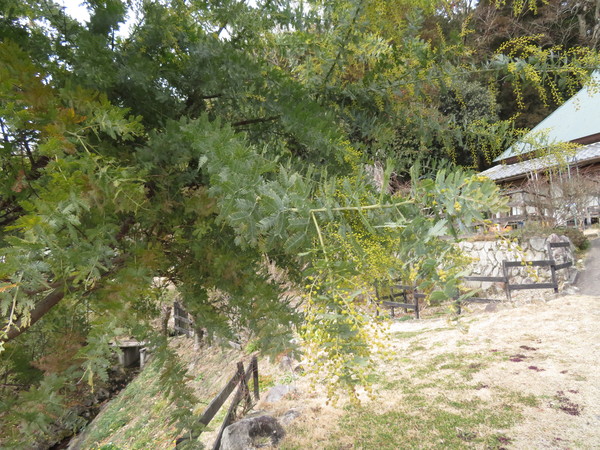
Acacia baileyana (Cootamundra wattle, "Gin'yoakashia")
Japanese name: ギンヨウアカシア
Scientific name: Acacia baileyana
[Overview]
An evergreen shrub or small tree about 5–10 m tall.
The leaves are bipinnately compound, 4–6 cm long, arranged alternately and spirally on the twigs.
They are silvery gray and consist of 2–6 pairs of pinnae, each bearing 12–20 pairs of leaflets about 6 mm long.
There are nectar glands at the base of the upper 2–3 pairs of pinnae.
At the branch tips it produces inflorescences 5–10 cm long, in which spherical flower heads are further gathered in racemes, densely bearing many golden flowers.
The fruit is a reddish brown flat pod about 7 cm long and 1 cm wide.
[Uses]
The flowers and leaves are beautiful and are used as cut branches.
[Cultivation]
Propagate from seed.
To promote germination, soak collected seeds in 80°C water for 30 minutes, leave them soaking for half a day to 2 days, and then sow.
The optimum germination temperature is 20–25°C, and germination begins about 1–3 weeks after sowing.
It prefers a sunny, well-drained site.
In warm regions from the Kanto region southward it can overwinter in the open ground, but in cold regions grow it in a pot and protect it from the cold in winter.
It will not flower without enough sun.
Strong wind can break branches and trunks, so avoid windy sites.
It tolerates light frost.
In a garden, once established, it needs no watering unless conditions become extremely dry.
Water in summer in the morning or evening when temperatures are low.
Pruning hard after flowering can prolong the life of the tree.
Mature trees are difficult to transplant, but if it must be done, perform root pruning the previous year.
Pests and diseases include scale insects and aphids.
[Notes]
The name comes from the silvery gray leaves.
Details
Japanese: ギンヨウアカシア
Translated from our Japanese encyclopedia. If anything differs, the Japanese page is correct.