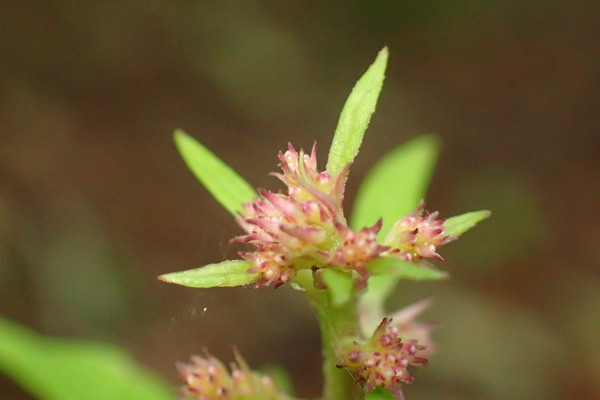
Japanese name: カニコウモリ(蟹蝙蝠) Scientific name:Parasenecio adenostyloides
[Overview]
A perennial 60–100 cm tall, found in coniferous forests and beech forests from the mountains to the subalpine zone.
It has a short rhizome.
The leaves are simple, about 3 sparsely alternate leaves, kidney-shaped, 6–11 cm long and 10–20 cm wide, with irregular coarse teeth, and are compared to a crab's shell.
The upper surface of the leaf is depressed along the veins.
The petiole is 3–13 cm long and has no wings; its base half clasps the stem and has small auricles.
The leaf sheath does not close into a cylinder.
White flower heads hang downward on a slender panicle, and each head consists of only 3–5 tubular flowers.
The involucre is narrowly cylindrical, with 3 involucral bracts.
The fruit is an achene with a white pappus.