
Plant Encyclopedia

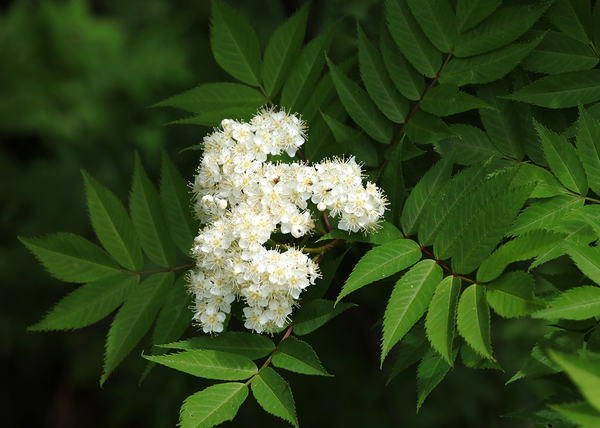
Sorbus commixta var. commixta (Japanese rowan, "Nanakamado")
Japanese name: ナナカマド (七竈)
Scientific name: Sorbus commixta var. commixta
[Overview]
A deciduous shrub or tree about 10 m tall, found from the mountains to the subalpine zone.
The leaves are alternate, odd-pinnately compound, and consist of 9–19 leaflets.
The leaflets are elliptic, 3–10 cm long and 1–2.5 cm wide, with 13–17 lateral veins.
The leaf margins are serrate, occasionally mixed with double serrations.
The leaves turn a brilliant red in autumn.
The stipules fall early.
Large compound corymbs at the branch tips bear many densely packed flowers.
The flowers are white, 5-petaled, 7–11 mm across.
There are 20 stamens and 2–4 styles.
The fruit is a spherical pome 6–8 mm across, ripening red and remaining after the leaves have fallen.
[Uses]
The fruit is used in processed foods.
[Cultivation]
Propagate from seed, by cuttings, or by grafting.
The germination rate of the seeds drops when they dry out, so harvest ripe fruits, wash off the flesh, bury the seeds in moist vermiculite or similar so they do not dry out, and store them in a cool, dark place; take them out the following spring and wash them thoroughly again before sowing.
It prefers a sunny, well-drained, fertile soil with moderate moisture.
For potted plants, water thoroughly when the soil surface dries; for plants in the ground, rainfall is sufficient unless summer brings a long sunny spell and the soil dries out.
Apply organic fertilizer around the plant as fertilizer in winter.
Pests and diseases include powdery mildew and borers (larvae of longhorn beetles).
[Notes]
The name is said to derive from the wood being so hard to burn that it would not be burned up even if put in the kamado (cooking stove) seven times.
Details
Japanese: ナナカマド(七竈)、オオナナカマド(大七竈)、エゾナナカマド(蝦夷七竈)
Translated from our Japanese encyclopedia. If anything differs, the Japanese page is correct.