
Plant Encyclopedia

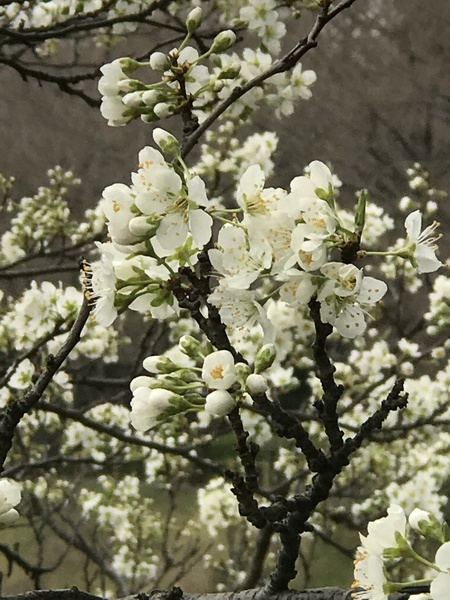
Prunus salicina (Japanese plum, "Sumomo")
Japanese name: スモモ (李、酸桃)
Scientific name: Prunus salicina
[Overview]
A deciduous small tree 9–12 m tall.
The branches are tinged with purple.
The leaves are simple and alternate, oblong, 6–8 cm long and 3–5 cm wide, with fine doubly serrate margins.
The petiole is 1–2 cm long, and there are 1–2 pairs of glands at the base of the leaf.
It flowers slightly before the leaves unfold.
Umbels or corymbs arise from the leaf axils, each bearing 1–3 white or pale pink flowers 1.5–2.2 cm across with 5 petals.
The fruit is about 3.5–5 cm across and ripens purplish red or yellow, with flesh of the same color.
[Uses]
The fruit is eaten, and the seeds are used medicinally.
[Cultivation]
Propagate from seed, by grafting, or from cuttings.
It prefers sunny, well-drained, fertile soil.
For potted plants, water thoroughly when the soil surface dries; for plants in the ground, rainfall is sufficient unless summer brings a long spell of sunny weather and the soil becomes severely dry.
Apply organic fertilizer three times a year: in winter in February, after flowering, and in autumn.
Thin the fruits in April–May once they have set.
Prune in winter, thinning out long branches that bear only leaf buds.
Pests and diseases include black spot, plum pockets, powdery mildew, scab, aphids, stink bugs, spider mites and leafrollers.
In addition, the fruits crack easily in the rain.
Details
Japanese: スモモ(李、酸桃)
Translated from our Japanese encyclopedia. If anything differs, the Japanese page is correct.