EVERGREEN

Plant Encyclopedia

Euphyllophyta
Angiospermae
Rosales
Rosaceae
Prunus
Prunus cerasifera ‘Atropurpurea’

Prunus cerasifera ‘Atropurpurea’ ("Benibasumomo")

Japanese name: ベニバスモモ
Scientific name: Prunus cerasifera ‘Atropurpurea’

Prunus cerasifera ‘Atropurpurea’

[Overview]
A cultivar of the cherry plum (Myrobalan plum).
A deciduous small tree 8–12 m tall.
The leaves are reddish purple.
The leaves are simple and alternate, oblong, 3–7 cm long, with serrations on the margin.
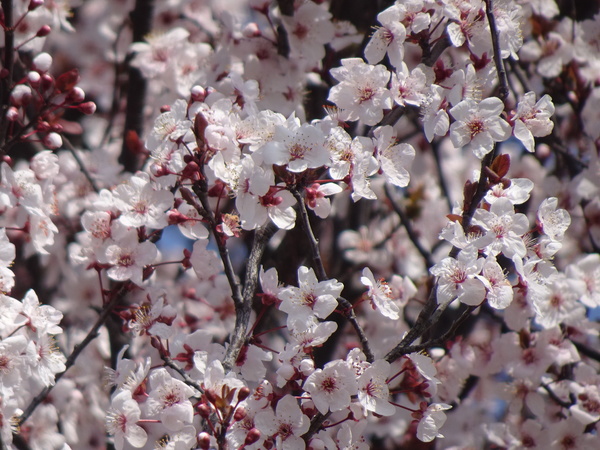
Umbels or corymbs in the leaf axils bear white or pale pink flowers 2–3 cm across with 5 petals.
The fruit is 2–3 cm across and ripens red.

[Uses]
The fruit is eaten, and the leaves are used medicinally.

[Cultivation]
Propagate from seed, grafting, or cuttings.
It prefers sunny, well-drained, fertile soil.
For potted plants, water thoroughly when the soil surface dries; for plants in the ground, rainfall is sufficient unless summer brings a long spell of sunny weather and the soil becomes severely dry.
Apply organic fertilizer three times a year: in winter in February, after flowering as a thank-you fertilizer, and in autumn.
Thin the fruit once it has set.
Prune in winter, thinning out long branches that bear only leaf buds.
Pests and diseases include powdery mildew, black spot, aphids, stink bugs, spider mites, and leaf rollers.

Details

Names
Japanese: ベニバスモモ
Life form
Small tree
Evergreen / deciduous
Deciduous
Leaf type
Broadleaf
Habit
Terrestrial
Planting (or sowing) season
January, February, March, November, December
Flowering season
February, March, April, May
Fruiting season
July, August, September
Growth form
Upright
Height
8000–12000 mm
Leaf shape
Simple leaf (unlobed)
Leaf arrangement
Alternate
Leaf margin
Serrate
Inflorescence
Corymb, Umbel
Number of petals
5
Flower color
Pink, White
Flower diameter
20–30
Fruit color
Red
Leaf color
Red, Purple
Availability of seeds and plants
Low
Form sold
Seedlings
Propagation
Seed, Grafting, Cuttings
Sun exposure
Full sun
Water needs
Moderate
Soil needs
Required
Suitable uses
Parks and gardens, Street trees
Hardiness zone
5a–9b
Diseases
Powdery mildew, Scab
Pests
Aphids, Stink bugs, Spider mites, Leafrollers
Taste
Sweetness, Sourness
Edible parts
Fruit
Uses
Medicinal, Edible
Japan Flower Trade Code
19375

Translated from our Japanese encyclopedia. If anything differs, the Japanese page is correct.

Sponsored