
Plant Encyclopedia

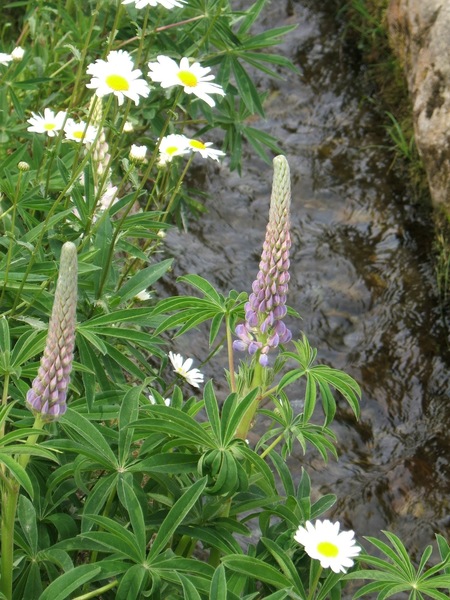
Lupinus polyphyllus (large-leaved lupine, "Tayohauchiwamame")
Japanese name: タヨウハウチワマメ (多葉羽団扇豆)
Scientific name: Lupinus polyphyllus
[Overview]
A perennial growing to about 1.5 m tall.
Because it has weak heat tolerance, it is treated as an annual in warm regions.
Except for the fruit, it is almost hairless.
The stem is erect.
The leaves are alternate and palmately compound, 9–17 cm long and 3–15 cm wide, with 9–18 leaflets.
The leaflets are lanceolate.
The leaves have long petioles.
At the stem tip, a raceme about 60 cm long stands upright and is densely covered with flowers.
The flowers are pea-shaped and blue to pink, but there are garden varieties in a variety of colors.
The fruit is a pod with hairs on its surface.
[Cultivation]
Propagate from seed.
It has a taproot and dislikes transplanting, so sow directly, or sow in pots and transplant in early spring.
In cold regions it grows well and flowers every year, but in warm regions it is treated as an annual.
It prefers fertile soil with good sun, drainage, water retention and aeration.
It dislikes acidic soil.
For potted plants, water thoroughly once the soil surface has dried.
It dislikes excess moisture, but if it becomes too dry the leaves may turn black and fall.
Apply organic fertilizer as a base fertilizer, and top-dress with slow-release chemical fertilizer in spring.
Fertilizer high in nitrogen makes the stems and leaves leggy and reduces flowering.
When all the flower spikes have finished blooming, cut the flower stalks at the base to enjoy a second flowering.
Pests and diseases include sclerotinia rot, southern blight, borers and aphids.
Details
Japanese: タヨウハウチワマメ(多葉羽団扇豆)、シュッコンルピナス、ルピナス、ノボリフジ(昇藤)、タチフジソウ(立藤草)
Translated from our Japanese encyclopedia. If anything differs, the Japanese page is correct.