
Plant Encyclopedia

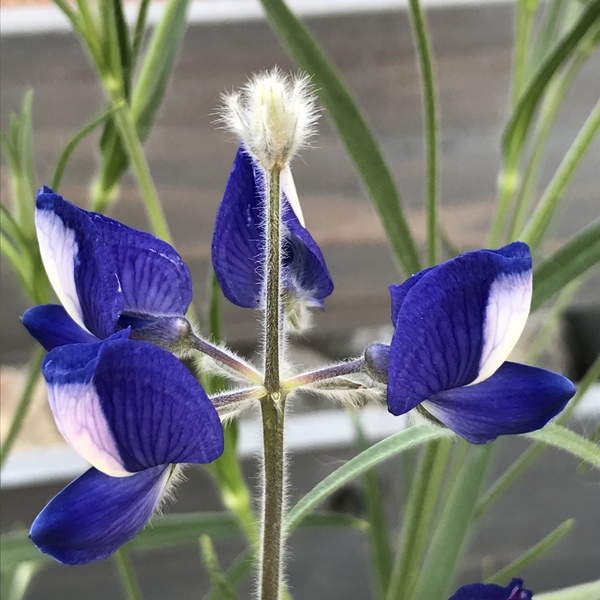
Lupinus texensis (Texas bluebonnet)
Japanese name: ブルーボネット
Scientific name: Lupinus texensis
[Overview]
An annual about 50 cm tall.
The whole plant is covered with white hairs.
The stem is erect.
The leaves are alternate and palmately compound, with 5–7 leaflets.
The leaflets are elliptic, 3–10 cm long.
The leaves have long petioles.
An erect raceme 20–50 cm long at the stem tip bears dense flowers.
The flowers are blue and pea-shaped, with white to yellow spots on the standard petal.
The fruit is a pod with a hairy surface.
[Cultivation]
Propagate from seed.
The optimum temperature for germination is 20°C.
It has a taproot and dislikes being transplanted, so sow directly, or sow in pots and transplant in early spring.
It prefers fertile soil with good drainage, water retention and aeration, in a sunny place.
It dislikes acidic soil.
For potted plants, water thoroughly after the soil surface has dried.
It dislikes excess moisture, but if it becomes too dry the leaves may turn black and fall.
Apply organic fertilizer as a base fertilizer, and top-dress with slow-release fertilizer in spring.
Fertilizer high in nitrogen makes the stems and leaves leggy and reduces flowering.
Pests and diseases include spider mites and aphids.
[Notes]
Several closely related species are also sometimes sold under the name "Bluebonnet."
Details
Japanese: ブルーボネット、ブルーボンネット
Translated from our Japanese encyclopedia. If anything differs, the Japanese page is correct.