
Plant Encyclopedia

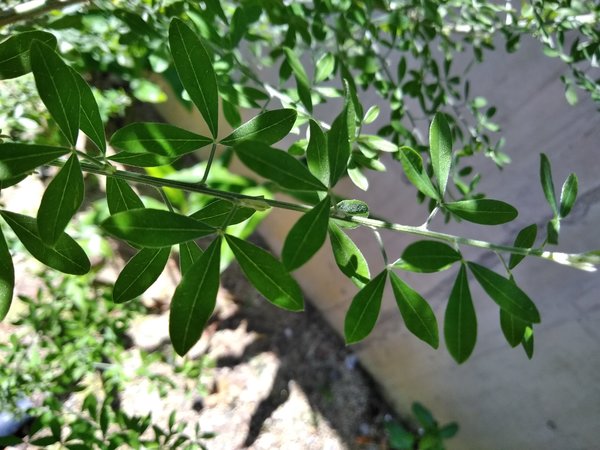
Cytisus scoparius (common broom, "Enishida")
Japanese name: エニシダ (金雀枝、金雀児)
Scientific name: Cytisus scoparius
[Overview]
An evergreen or semi-evergreen shrub 1–3 m tall, sometimes 4 m.
It produces many thin green branches from the base of the plant and branches well.
The leaves are alternate and trifoliate, about 1 cm long, but the leaves at the branch tips consist of a single leaflet only (unifoliolate).
The flowers are yellow pea-shaped flowers borne 1–2 at a time in the leaf axils, and they bloom in such numbers that they cover the plant.
The fruit is a legume.
[Uses]
It is a poisonous plant, but the branches and leaves are used medicinally.
[Cultivation]
Propagate from seed or by cuttings.
To promote germination, soak the collected seeds in 80°C water for 30 minutes, then leave them in the water for half a day to 2 days before sowing.
It grows fast and thrives even in poor soil, but its lifespan is relatively short.
It is somewhat sensitive to cold and grows from southern Hokkaido to Okinawa, but growth is poor north of central Tohoku.
It prefers a sunny, well-drained, rather dry site.
Poor drainage damages the roots during the rainy season and long autumn rains and can cause the plant to die, and poor sunlight reduces flowering.
It cannot be planted in overly wet places where water stagnates.
Large plants are difficult to transplant.
For potted plants, and for young plants in the ground, water thoroughly when the soil surface dries.
For large plants in the ground, rainfall is sufficient.
Apply organic fertilizer around the base of the plant as fertilizer in winter.
It tolerates pruning.
There are no particular pests or diseases.
It suffers from replant problems when grown repeatedly in the same place.
[Notes]
The Japanese name is said to have come from a corruption of Genista, an old scientific name.
Details
Japanese: エニシダ(金雀枝、金雀児)
Translated from our Japanese encyclopedia. If anything differs, the Japanese page is correct.