
Plant Encyclopedia

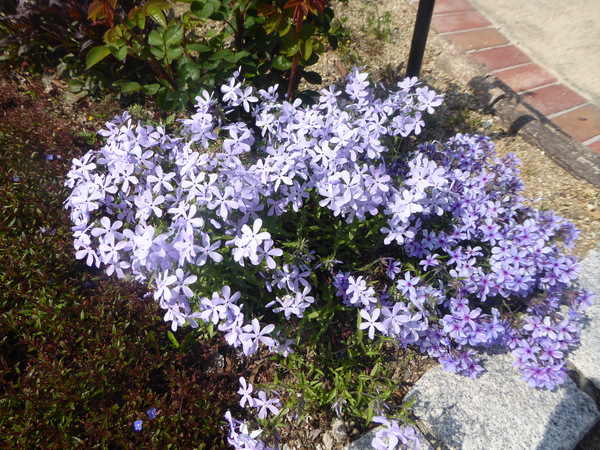
Phlox divaricata (woodland phlox)
Japanese name: フロックス ディバリカタ
Scientific name: Phlox divaricata
[Overview]
A perennial 20–45 cm tall, found in its native range in forests, fields and along streams.
It produces non-flowering creeping stems that root at the nodes and spread, forming colonies.
The stems have glandular hairs and are slightly sticky.
The leaves are simple and opposite, lanceolate to elliptical, about 5 cm long, with entire margins; the leaves on the creeping stems are broader than those on the upright flower stems.
Cymes at the tips of the flower stems bear about 9–24 flowers in pale bluish purple to wisteria color or pink.
The corolla is 2–3 cm across and 5-lobed, opening flat, and the lobes are sometimes notched at the tip.
The flowers are slightly fragrant.
The fruit is a capsule.
[Cultivation]
Propagate from seed, by division, or by stem cuttings.
If conditions suit it, it spreads well from self-sown seed and grows well even when left alone.
It prefers a somewhat cool climate.
It prefers sun to bright partial shade and fertile, moist soil that is well drained and well ventilated.
For plants in the ground, it is good to plant them under deciduous trees.
For potted plants, water thoroughly when the soil surface dries; for plants in the ground, rainfall is sufficient.
For potted plants, apply liquid fertilizer once a month.
Removing spent flowers promptly and cutting the plant back during the rainy season helps prevent diseases caused by stuffiness.
Pests and diseases include powdery mildew, gray mold, spider mites and armyworms.
Details
Japanese: フロックス ディバリカタ、ハルザキフロックス
Translated from our Japanese encyclopedia. If anything differs, the Japanese page is correct.