EVERGREEN

Plant Encyclopedia

Lobularia

Lobularia (genus)

Japanese name: ロブラリア
Scientific name: Lobularia

Lobularia

[Overview]
A perennial, sometimes a subshrub, but because it dislikes heat and humidity it is treated as an annual in Japan.
The stem branches at the base and in the upper part.
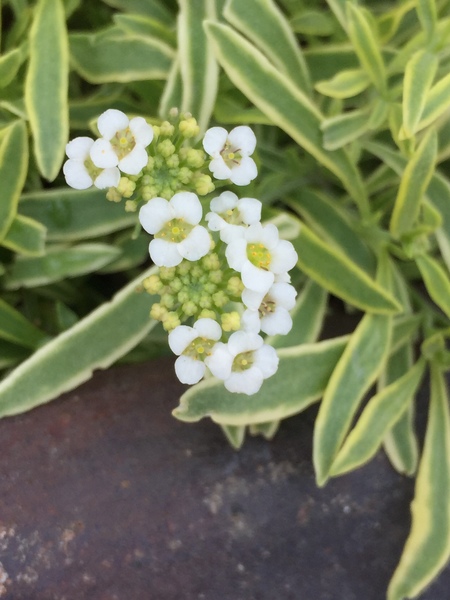
The leaves are simple and alternate, linear to elliptic, with many stellate hairs and entire margins.
Corymbs or racemes emerge at the stem tips and bear fragrant 4-petaled flowers.
The fruit is a silicle.

[Cultivation]
Propagate from seed or by stem cuttings.
It prefers soil that is sunny, well drained, moisture-retentive and well aerated.
It dislikes acidic soil.
Frost damages the plant, so protection from frost is necessary.
It dislikes heat and humidity, so if you want it to survive the summer, cut it back to near the base of the plant around the rainy season.
It does better slightly on the dry side; water thoroughly once the soil has dried.
Apply slow-release chemical fertilizer as a base fertilizer, and during flowering apply diluted liquid fertilizer once every 1–2 weeks.
Pests and diseases include gray mold, sclerotinia rot and aphids.

Details

Names
Japanese: ロブラリア
Life form
Annual, Perennial, Subshrub
Habit
Terrestrial
Flowering season
February, March, April, May, June, September, October, November, December
Distribution or origin
Mediterranean coastal region, Macaronesia
Height
50–400 mm
Leaf shape
Simple leaf (unlobed)
Leaf arrangement
Alternate
Leaf margin
Entire
Inflorescence
Raceme, Corymb
Number of petals
4
Flower color
Red, Orange, Purple, Pink, White
Leaf color
Green
Availability of seeds and plants
Low
Form sold
Seeds, Seedlings
Propagation
Seed, Bud cuttings
Sun exposure
Full sun
Water needs
Moderate
Soil needs
Required
Soil acidity
Alkaline, Neutral
Tolerance
Salt-spray tolerance
Suitable uses
Ground cover, Rock garden, Potted plant, Flower bed, Parks and gardens, Container, Balcony, Hanging basket
Diseases
Aphids
Pests
Gray mold, Sclerotinia rot

Translated from our Japanese encyclopedia. If anything differs, the Japanese page is correct.

Sponsored