[Overview]
A succulent perennial, or a shrubby or tree-like plant.
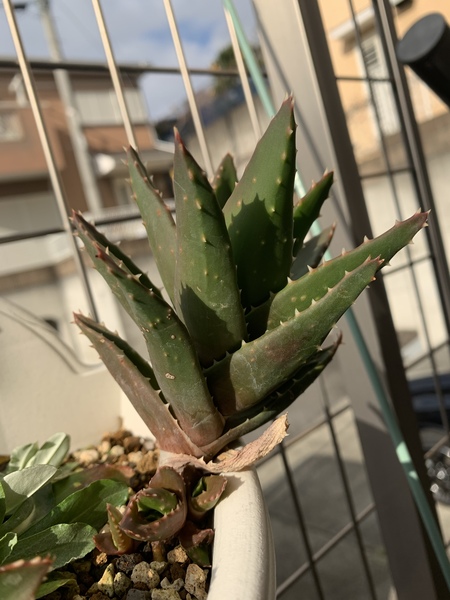
Most species are stemless, with leaves in a rosette that are thick and sharply pointed, with serrated or spiny edges.
A raceme or panicle is borne at the tip of a long flower stalk and bears cylindrical 6-petaled flowers.
The fruit is a capsule.
It resembles Agave (the genus Agave), but can be distinguished by its leaves not becoming fibrous.
[Cultivation]
Propagate from seed, by cuttings, or by division.
It prefers well-drained, sunny soil and good ventilation.
In winter, bring it indoors to a sunny windowsill, but it can overwinter outdoors in areas without frost.
Take care not to overwater; from spring to autumn water only after the soil in the pot has dried completely, and keep it even drier in winter.
From spring to autumn, apply liquid fertilizer about twice a month, or place slow-release fertilizer on the soil.
Pests and diseases include scale insects and aphids.