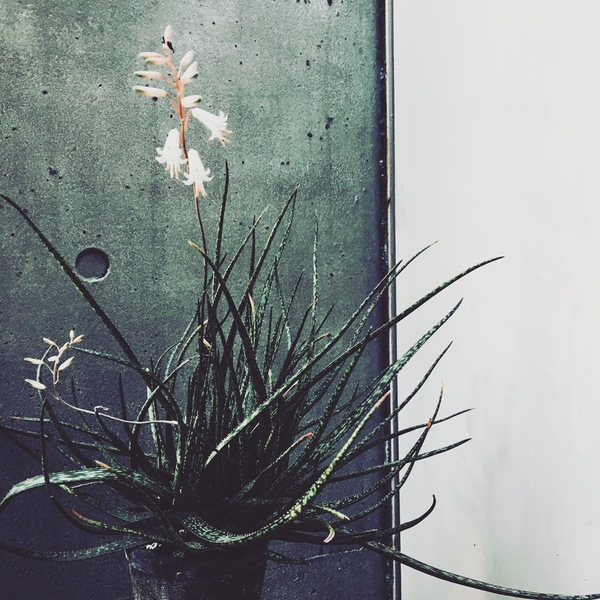
Japanese name: アロエ アルビフロラ Scientific name:Aloe albiflora
[Overview]
A succulent perennial growing 20–30 cm tall.
The leaves form a rosette and stand upright; they are narrow, fleshy and triangular, with triangular spines along the margins.
The leaves have white spots.
An upright raceme bears cylindrical white 6-petaled flowers about 1.5 cm long.
The petals have green stripes.
The stamens protrude out of the flower, and the anthers are orange.
[Cultivation]
Propagate from seed or by division.
It prefers sunny, well-drained soil.
In winter bring it indoors to a sunny windowsill, but it can overwinter outdoors in regions without frost.
Take care not to overwater; from spring to autumn water only after the soil in the pot has dried completely, and keep it drier still in winter.
From spring to autumn, apply liquid fertilizer about twice a month, or place slow-release fertilizer on the soil.
Pests and diseases include scale insects and aphids.