
Plant Encyclopedia

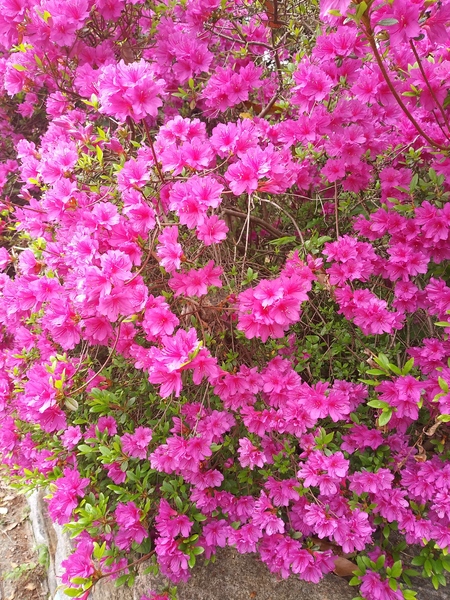
Rhododendron Kurume Group ("Kurumetsutsuji")
Japanese name: クルメツツジ (久留米躑躅)
Scientific name: Rhododendron Kurume Group
[Overview]
An evergreen shrub.
The leaves are simple and alternate, elliptical, about 2 cm long, with hairs on the margins.
Some turn red in autumn to winter.
It is small-flowered and free-flowering, with so many flowers that the whole plant is covered.
The flowers range from red to white, and there are 5 stamens.
There are many cultivars, including double-flowered ones.
[History]
It was bred in Kurume, Kyushu, in the late Edo period from Kirishima-tsutsuji, Sata-tsutsuji and others.
[Cultivation]
Propagate by cuttings.
It prefers fertile, acidic soil in a sunny site that is well drained and moisture-retentive.
Avoid dry places, or prevent the base of the plant from drying out by mulching or similar.
For potted plants, it is best to place them in partial shade out of the afternoon sun and direct summer sunlight from spring to autumn, and in a sunny spot sheltered from cold wind from autumn to spring; for plants in the ground, a place shaded by deciduous trees is good.
For potted plants, from autumn to spring water thoroughly when the soil surface dries, and in midsummer water twice a day, in the cool morning and evening, wetting the leaves as well.
For plants in the ground, rainfall is sufficient except in summer; in summer water in the cool morning or evening, wetting the leaves as well, and in winter, if dry weather continues, water in the morning on a warm day.
Apply organic fertilizer or a slow-release fertilizer with equal amounts of the three components around the plant three times in total: fertilizer in winter, fertilizer after flowering as thanks to the plant, and in autumn.
Remove spent flowers promptly.
Pests and diseases include spider mites, azalea lace bugs and Orgyia-like azalea leaf moths (Benimon-aoringa).
Details
Translated from our Japanese encyclopedia. If anything differs, the Japanese page is correct.