EVERGREEN

Plant Encyclopedia

Amelanchier

Amelanchier (genus, Juneberry)

Japanese name: ジューンベリー
Scientific name: Amelanchier

Amelanchier

[Overview]
A deciduous shrub to small tree that is also used as a fruit tree.
The group consists of about 33 species and is found mostly in North America; one species occurs in Europe and one species, Zaifuri-boku (Shide-zakura), occurs in Japan.
The leaves are simple and alternate, with serrated margins.
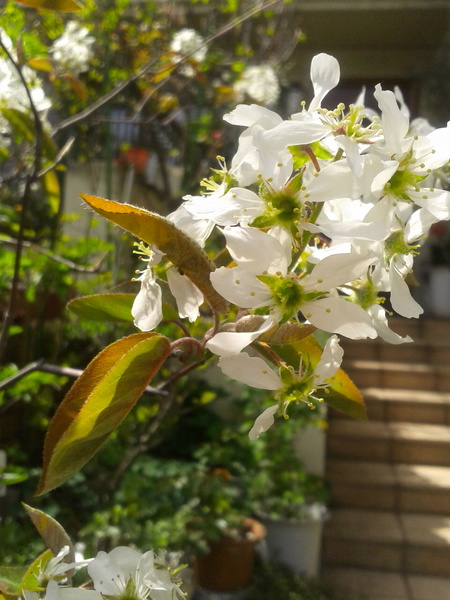
The flowers are white and 5-petaled, open around the time the leaves unfold, and are usually borne in racemes at the branch tips.
The petals are usually long and narrow.
The fruit is a pome that ripens red to black.

[Uses]
The fruit is used in cooking or made into dried fruit.

[Cultivation]
It is robust and not particular about soil.
It prefers a sunny site and dislikes dryness.
Propagate from seed, cuttings, layering or suckers.
When propagating from seed, stratifying the seeds improves the germination rate.
Pests and diseases include fire blight, oriental moth caterpillars (Irago), aphids and longhorn beetles.
In addition, netting is necessary if you want to prevent wild birds from eating the fruit.

Details

Names
English: Juneberry, serviceberry, sarviceberry, shadbush, shad, sugarplum
Japanese: ジューンベリー、セイヨウザイフリボク(西洋采振木)
Life form
Shrub, Small tree
Evergreen / deciduous
Deciduous
Leaf type
Broadleaf
Habit
Terrestrial
Planting (or sowing) season
December, January, February, March
Flowering season
April, May
Fruiting season
June
Distribution or origin
Northern Hemisphere temperate zone
Growth form
Upright
Leaf shape
Simple leaf (unlobed)
Leaf arrangement
Alternate
Leaf margin
Serrate
Inflorescence
Raceme
Number of petals
5
Flower color
White
Fruit color
Red, Black
Leaf color
Green
Availability of seeds and plants
Low
Form sold
Seedlings
Propagation
Seed, Cuttings, Layering, Suckers
Sun exposure
Full sun
Water needs
Moderate
Soil needs
Required
Suitable uses
Potted plant, Flower bed, Parks and gardens, Container
Diseases
Fire blight
Pests
Slug caterpillars, Aphids, Longhorn beetles
Taste
Sweetness, Sourness
Edible parts
Fruit
Uses
Edible
Japan Flower Trade Code
22318

Translated from our Japanese encyclopedia. If anything differs, the Japanese page is correct.

Sponsored