
Plant Encyclopedia

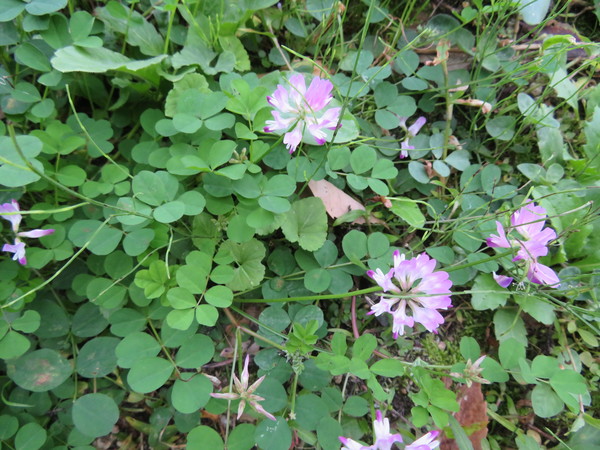
Astragalus sinicus ("Genge")
Japanese name: ゲンゲ (翹揺、紫雲英)
Scientific name: Astragalus sinicus
[Overview]
A biennial found in fields, meadows and roadsides.
The stems are 10–30 cm tall, branch profusely at the base, and spread along the ground.
The leaves are alternate and odd-pinnately compound, with 9–11 leaflets.
The leaflets are obovate to elliptic, 8–15 mm long, with rounded tips and entire margins.
Ovate stipules 3–6 mm long are present.
Umbels on flower stalks 10–15 cm long extend from the leaf axils, bearing 7–10 flowers in a whorl.
The flowers are reddish purple papilionaceous flowers 12–14 mm long.
The fruit is a legume about 2–2.5 cm long and 4 mm wide, with a beak-like pointed tip, and it ripens black.
[History]
Because symbiotic root nodule bacteria fix nitrogen from the air, it was cultivated in rice paddies as green manure, and plants that escaped from cultivation have become wild.
[Uses]
It is useful as green manure, fodder, and also as a nectar source plant.
The young shoots are edible.
The whole plant is used medicinally.
[Cultivation]
Propagate from seed.
It prefers a warm, sunny, well-ventilated place that is slightly moist.
With poor sunlight, flowering is poor.
It is not particular about soil, except for extremely well-drained soil.
It is vigorous and grows well even when left alone.
It is sensitive to dryness, so take care not to let it run short of water.
Fertilizer is not necessary.
[Notes]
The alternative name Rengesou comes from comparing the shape of the flower to a lotus (renge).
Details
Translated from our Japanese encyclopedia. If anything differs, the Japanese page is correct.