EVERGREEN

Plant Encyclopedia

Linanthus grandiflorus

Linanthus grandiflorus (mountain phlox, "Mauntenfurokkusu")

Japanese name: マウンテンフロックス
Scientific name: Linanthus grandiflorus

Linanthus grandiflorus

[Overview]
An annual 30–50 cm tall.
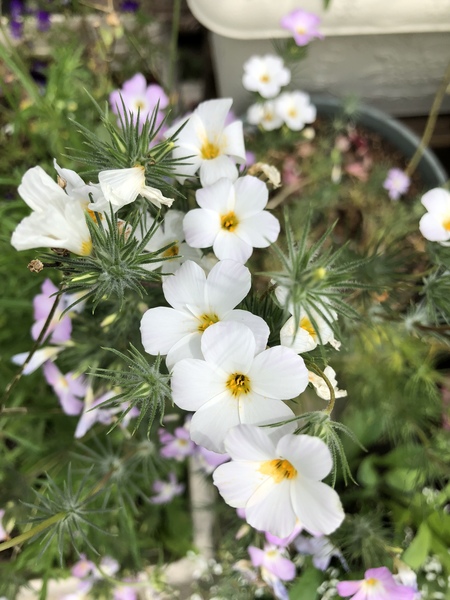
The whole plant is covered with many hairs and looks whitish.
The stem branches.
The leaves are alternate or opposite, finely palmately divided into 5–11 lobes; the lobes are needle-like linear, about 3 cm long.
Capitate inflorescences at the stem tips bear flowers about 3 cm across.
The corolla is funnel-shaped and 5-lobed, white, pink or lilac.
The fruit is a capsule.
It dies back in summer after flowering.

[Cultivation]
Propagate from seed.
It prefers sunny, well-drained, somewhat dry, poor soil.
Take care not to overwater; for potted plants, water thoroughly when the soil surface dries, and for plants in the ground, rainfall is sufficient.
If fertilizer is applied at planting time, no further fertilizing is particularly necessary.
Remove spent flowers promptly.
There are no particular pests or diseases.

Details

Names
English: mountain phlox, large-flower desert-trumpets, large-flower linanthus, large flowered leptosiphon
Japanese: マウンテンフロックス、タイリンギリア
Life form
Annual
Habit
Terrestrial
Planting (or sowing) season
March, April, September, October
Flowering season
April, May, June, July
Distribution or origin
United States (California)
Height
300–500 mm
Leaf shape
Lobed leaf
Leaf arrangement
Opposite, Alternate
Inflorescence
Head
Flower color
Purple, Pink, White
Flower diameter
30
Leaf color
Green
Availability of seeds and plants
Low
Form sold
Seeds
Propagation
Seed
Sun exposure
Full sun
Water needs
Moderate
Soil needs
Required
Suitable uses
Potted plant, Flower bed, Container
Japan Flower Trade Code
38388

Translated from our Japanese encyclopedia. If anything differs, the Japanese page is correct.

Sponsored