EVERGREEN

Plant Encyclopedia

Muscari comosum ‘Plumosum’

Muscari comosum ‘Plumosum’ ("Hanemusukari")

Japanese name: ハネムスカリ
Scientific name: Muscari comosum ‘Plumosum’

Muscari comosum ‘Plumosum’

[Overview]
A bulbous perennial.
The bulb is egg-shaped.
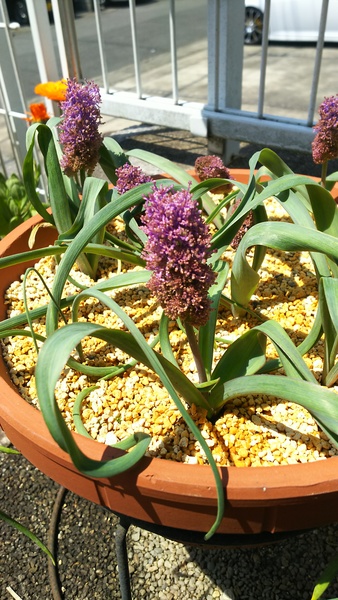
3–6 leaves grow from the base; they are linear, about 30 cm long, and somewhat fleshy.
A raceme is produced at the tip of an upright flower stalk.
The inflorescence consists entirely of sterile, wisteria-pink flowers and looks feathery.

[Cultivation]
Propagate by dividing the bulbs.
It prefers a sunny, well-drained, somewhat sandy soil.
For potted plants, water thoroughly during the growing period once the soil has dried; for plants in the ground, rainfall is sufficient.
In spring and autumn, apply slow-release fertilizer placed on the soil.
White silky mold (southern blight) can occur.

Details

Names
Japanese: ハネムスカリ、ウモウムスカリ
Life form
Perennial
Habit
Terrestrial
Planting (or sowing) season
September, October, November
Flowering season
April, May
Leaf shape
Linear
Leaf arrangement
Basal
Leaf margin
Entire
Flower color
Purple, Pink
Leaf color
Green
Availability of seeds and plants
Low
Form sold
Bulbs
Propagation
Bulbs
Sun exposure
Full sun
Soil needs
Required
Suitable uses
Potted plant, Flower bed, Parks and gardens, Container, Balcony
Diseases
Southern blight
Japan Flower Trade Code
29484

Translated from our Japanese encyclopedia. If anything differs, the Japanese page is correct.

Sponsored