
Plant Encyclopedia

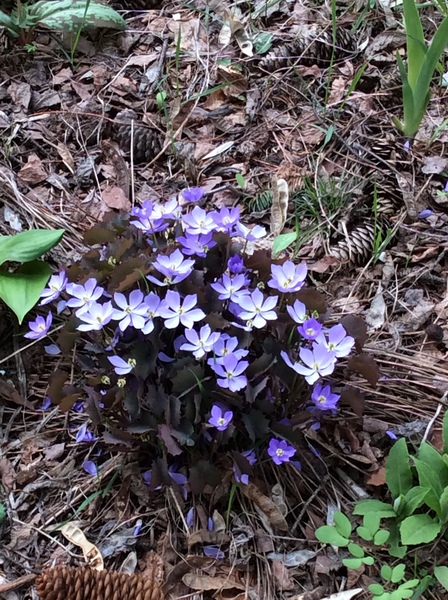
Plagiorhegma dubium ("Tatsutaso")
Japanese name: タツタソウ (竜田草)
Scientific name: Plagiorhegma dubium
[Overview]
A perennial 10–30 cm tall, found in its native range on bright forest floors and moist slopes in the mountains.
It has a yellow rhizome.
The leaves are simple and basal, kidney-shaped, 6–8 cm long and 9–10 cm wide, with a notched tip and a grayish tinge.
The new leaves are tinged reddish purple and rolled.
The leaf stalks are thin, hard and reddish, and extend to 10–30 cm after flowering.
Purple six-petaled flowers 2–2.5 cm across are borne singly, facing upward, at the tips of the flower stalks.
There are also white-flowered and double-flowered forms.
The fruit is a capsule.
[Cultivation]
Propagate from seed or by division.
The seeds dislike drying out, so sow them immediately after collecting, or store them moist and sow in the following spring.
From winter through the flowering season, keep it in a sunny place, and in summer in a cool, airy place in bright shade.
Also protect it from cold winter winds.
For plants in the ground, a spot shaded by deciduous trees is good.
It prefers well-drained, fertile soil.
For potted plants, water thoroughly when the soil surface dries, and do not let the soil dry out completely even during dormancy.
For plants in the ground, rainfall is sufficient unless sunny weather continues in summer and the soil dries out.
Apply basal fertilizer, and place slow-release fertilizer on the soil in spring and autumn.
Powdery mildew, slugs and armyworms can occur.
[Notes]
The Japanese name comes from the name of a warship from the Russo-Japanese War, because the ship's crew collected the plant.
The alternative Japanese name comes from the leaf shape resembling a spool for thread.
Details
Translated from our Japanese encyclopedia. If anything differs, the Japanese page is correct.