[Overview]
A perennial.
The underground stem swells into a tuber or corm.
Many species have a smell similar to garlic.
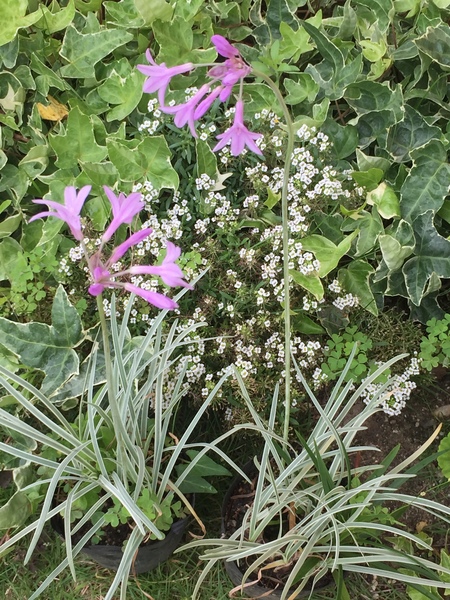
Five to eight linear leaves grow from the base.
A slender flower stalk emerges from the center of the plant and bears 10–30 flowers in an umbel.
The flowers are six-petaled, about 2 cm across, with a small tongue-shaped corona.
The fruit is a capsule.
[Cultivation]
Propagate from seed or by division.
The bulbs can be left in the ground for several years without being dug up.
It prefers sunny, well-drained soil.
In poor light it becomes leggy.
It tolerates a certain amount of frost, but in cold regions protection from frost is necessary.
For potted plants, water thoroughly after the soil has dried; for plants in the ground, rainfall is sufficient.
In spring and autumn, apply slow-release fertilizer placed on the soil.
If you do not intend to collect seed, cutting off the flower heads after flowering keeps the plant from tiring.
There are no particular pests or diseases.