
Plant Encyclopedia

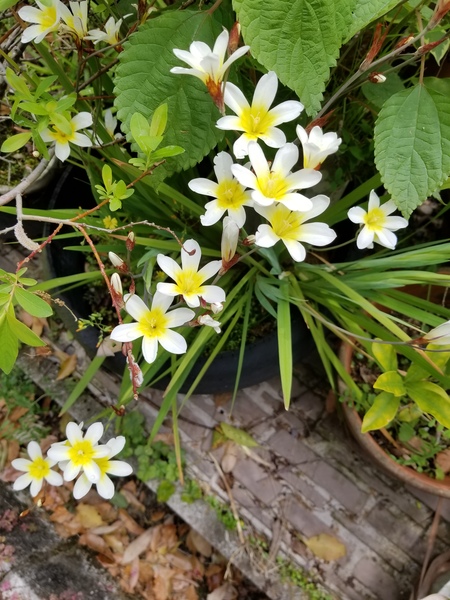
Sparaxis (genus, harlequin flower, "Suparakishisu")
Japanese name: スパラキシス
Scientific name: Sparaxis
[Overview]
A perennial growing to about 60 cm tall.
It has small corms.
Most of the leaves arise from the base and are sword-shaped to linear.
The leaves die back before summer, and the plant is dormant in summer.
2–3 flower stalks grow from each corm, bearing spike-like inflorescences with several flowers set sparsely.
The flowers have 6 petals.
Many of the flowers have a yellow and black pattern at the center.
The fruit is a capsule.
[Cultivation]
Propagate from seed or by division of corms.
It also multiplies by self-sown seed.
When grown from seed, it takes 3–4 years to flower.
When lifting the bulbs, dig them up after the leaves have died back and store them dry in a cool place until planting in autumn.
Plant the bulbs deeply, about 5–6 per No. 4 pot.
In the Kanto region and areas to the south, it can overwinter outdoors if protected from frost.
It prefers soil that is sunny, well drained and well aerated.
In spring and autumn, water thoroughly when the soil surface dries; keep it on the dry side in winter, and withhold water during summer dormancy.
Apply basal fertilizer, and for potted plants also apply liquid fertilizer once every 2 weeks during the spring growing season.
There are no particular pests or diseases.
Details
Japanese: スパラキシス
Translated from our Japanese encyclopedia. If anything differs, the Japanese page is correct.