
Plant Encyclopedia

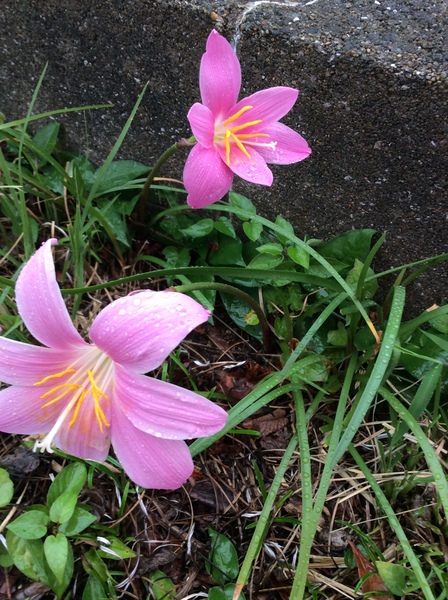
Habranthus (genus, copperlily, "Haburansasu")
Japanese name: ハブランサス
Scientific name: Habranthus
[Overview]
An evergreen perennial 15–40 cm tall.
It has an underground bulb.
The leaves grow from the base and are thick and linear.
A flower is usually borne singly at the tip of a flower stalk rising from the bulb.
The flower is funnel-shaped with 6 petals, faces slightly sideways, and is yellow-orange or pink.
Each flower closes after one day.
The flowering season is mainly autumn; when it rains, the flower stalks elongate and bloom, and it flowers several times a year.
There are 6 stamens, and the tip of the pistil's stigma is 3-lobed.
The fruit is a capsule.
[Cultivation]
Propagate from seed or by dividing bulbs.
The seeds have a relatively short lifespan, so sow them immediately after harvesting.
The wild species also multiplies readily from self-sown seed.
Plants flower 2–3 years after germination.
Divide bulbs in spring; when planting, space them closely for dense planting (about 5–7 bulbs in a 15 cm pot) and plant shallowly so that only the tops of the bulbs are covered.
It is not particular about soil as long as the site is sunny and well drained.
It is easy to grow.
Hardy species can be left planted, but semi-hardy species are protected in winter with mounded soil or a straw mulch.
For potted plants, water thoroughly when the soil surface dries.
For plants in the ground, water if there are several days without rain.
Do not let it dry out during the growing season.
In addition to organic fertilizer as base fertilizer, give a fertilizer high in potassium after flowering.
There are no particular pests or diseases.
[Notes]
It is closely related to the genus Zephyranthes, which includes Tamasudare, but whereas Zephyranthes flowers face upward, the flowers of this plant face slightly sideways.
Details
Japanese: ハブランサス、レインリリー
Translated from our Japanese encyclopedia. If anything differs, the Japanese page is correct.