
Plant Encyclopedia

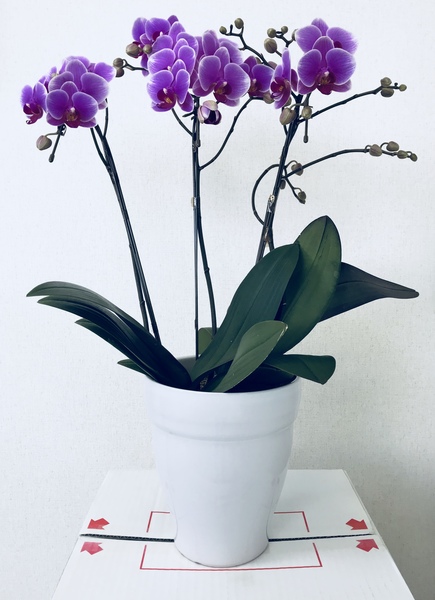
Phalaenopsis (genus, "Kochoran")
Japanese name: コチョウラン (胡蝶蘭)
Scientific name: Phalaenopsis
[Overview]
An evergreen perennial.
An epiphytic orchid.
It does not form pseudobulbs.
Several thick, broad leaves grow alternately on a short stem.
Flower stalks arching from the leaf axils bear several to several dozen flowers.
The flowers last very long, and some can be enjoyed for more than a month.
[Cultivation]
It is a difficult plant to propagate; increase it by division or by removing keikis when side shoots or keikis form.
It prefers heat, shade and a well-ventilated place, and the suitable growing temperature is 17–20°C or higher throughout the year.
If it is exposed to low temperatures while in bloom in particular, the flowers become spotted.
Plant it in sphagnum moss, bark or coconut husk chips alone.
In winter keep it in a bright room out of direct sunlight, in spring and autumn place it in the sun, and in summer place it in shade or provide about 50% shading.
In spring and autumn, water thoroughly when the potting material begins to dry; in midsummer and winter keep it on the dry side.
In spring, place fertilizer such as oil cake on the soil, and from spring to autumn apply diluted liquid fertilizer once a week.
Pests and diseases include soft rot, black spot and slugs.
[Notes]
Kochoran (moth orchid) originally refers to the species Phalaenopsis aphrodite, but most of the plants in circulation are hybrid cultivars.
Doritaenopsis (Doritaenopsis) is also sold under the name kochoran.
Details
Translated from our Japanese encyclopedia. If anything differs, the Japanese page is correct.