EVERGREEN

Plant Encyclopedia

Melissa officinalis

Melissa officinalis (lemon balm, "Kosuihakka")

Japanese name: コウスイハッカ (香水薄荷)
Scientific name: Melissa officinalis

Melissa officinalis

[Overview]
A perennial growing to about 60 cm tall.
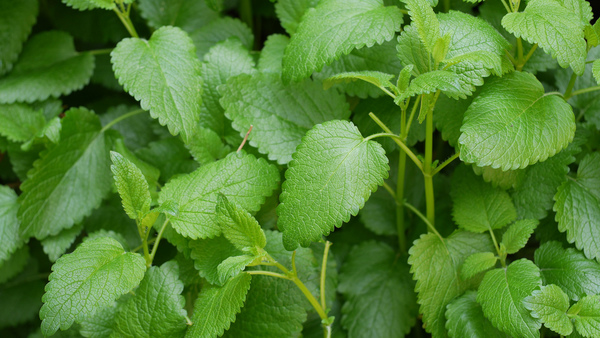
Leaves are simple and opposite, broadly ovate, about 8 cm long, hairy, with tooth-like serrations.
The veins on the upper surface of the leaves are sunken in a net-like pattern.
The leaves contain citral and smell of lemon.
Whorled cymes arise on the upper part of the stem, bearing a few small white flowers.
The corolla is two-lipped, and because it contains abundant nectar, honeybees visit often.

[Uses]
Besides yielding essential oil, it is used for herbal tea, potpourri, flavoring in cooking, bath additives and the like.

[Cultivation]
Propagate from seed, by division, or by cuttings.
It prefers bright shade and slightly moist soil.
It is strongly drought tolerant and also tolerates heat and humidity, but care is needed because when the branches become crowded, they become stuffy and disease may occur.

Details

Names
English: lemon balm, common balm, balm mint, balm
Japanese: コウスイハッカ(香水薄荷)、セイヨウヤマハッカ(西洋山薄荷)、レモンバーム
Life form
Perennial
Habit
Terrestrial
Planting (or sowing) season
April, May, September, October
Flowering season
June, July, August
Distribution or origin
Southern Europe, Asia Minor
Height
600 mm
Leaf shape
Simple leaf (unlobed)
Leaf arrangement
Opposite
Leaf margin
Serrate
Inflorescence
Verticillate cyme
Flower color
White
Leaf color
Green
Availability of seeds and plants
Low
Form sold
Seedlings
Propagation
Seed, Division, Bud cuttings
Sun exposure
Partial shade
Water needs
Moderate, Moist
Soil needs
Required
Tolerance
Drought tolerance
Suitable uses
Potted plant, Flower bed
Diseases
Sooty mold
Uses
Beverage, Potpourri, Essential oil, Bath use, Medicinal
Japan Flower Trade Code
23019

Translated from our Japanese encyclopedia. If anything differs, the Japanese page is correct.

Sponsored