
Plant Encyclopedia

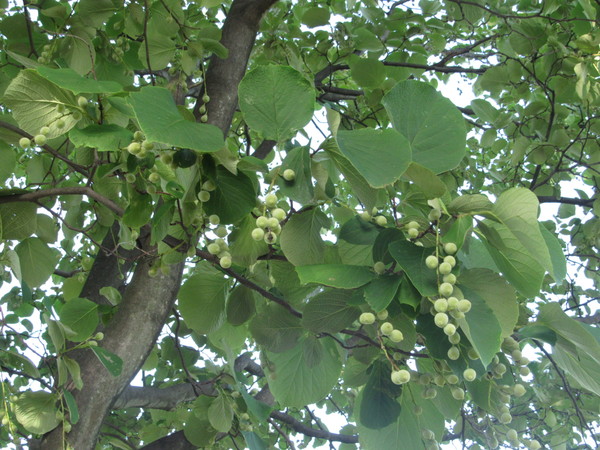
Styrax obassia (fragrant snowbell, "Hakunboku")
Japanese name: ハクウンボク (白雲木)
Scientific name: Styrax obassia
[Overview]
A deciduous small tree 6–15 m tall, found in the mountains.
Young branches are green and have stellate hairs.
Leaves are simple and alternate, obovate, densely covered with stellate hairs and grayish white beneath.
The leaf margin has irregular fine teeth.
The petiole is 1–2 cm.
Racemes 8–17 cm long hang at the tips of the current year's branches, with many white flowers hanging from them.
The corolla is deeply 5-lobed, with 10 stamens attached at the base.
When the flowers fall, the corolla drops off whole.
The flower stalk is 0.7–1 cm long.
The fruit is ovoid and densely covered with stellate hairs.
When ripe, the fruit splits lengthwise and releases one large brown seed.
[Uses]
Oil can be extracted from the seeds.
The wood is used for lathe work and similar crafts.
[Cultivation]
Propagate from seed or by cuttings.
A fertile soil in sun to partial shade that is well drained, well aerated and moderately moist is suitable.
Avoid dry places and places exposed to strong afternoon sun.
It is somewhat sensitive to dryness and sea wind.
Take care that it does not dry out; for potted plants, water thoroughly when the soil surface dries.
Apply organic fertilizer around the plant as fertilizer in winter, and after flowering give a small amount of slow-release chemical fertilizer or oil cake as thanks fertilizer.
Do not prune hard; only thin out branches and maintain the natural form.
Pests and diseases include teppo-mushi (longhorn beetle larvae), aphids and scale insects.
[Notes]
The name is said to compare the appearance of the white flowers in bloom to white clouds.
Details
Japanese: ハクウンボク(白雲木)、オオバヂシャ
Translated from our Japanese encyclopedia. If anything differs, the Japanese page is correct.