
Plant Encyclopedia

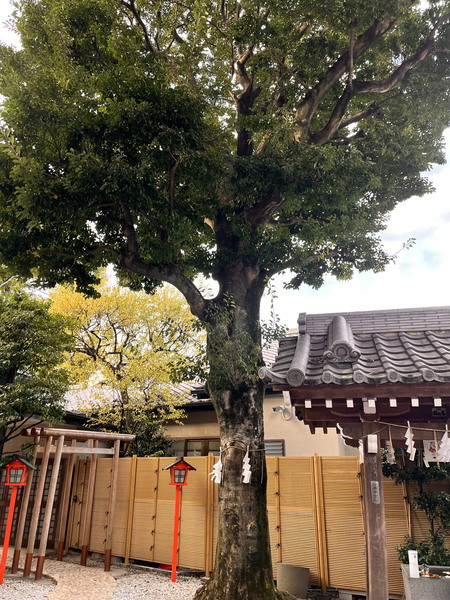
Castanopsis sieboldii subsp. sieboldii (Itajii Chinkapin, "Sudajii")
Japanese name: スダジイ
Scientific name: Castanopsis sieboldii subsp. sieboldii
[Overview]
An evergreen tree reaching 20 m in height and 1 m in diameter.
The bark is deeply fissured lengthwise.
The branches divide well and form a large, rounded crown.
The leaves are simple and alternate, elliptic-ovate to lanceolate, 5–15 cm long.
The leaf margin is entire or has a few wavy teeth.
The upper surface of the leaf is deep green, and the underside is silvery brown.
The petiole is about 1 cm long.
There are male flowers and female flowers.
The male flowers are borne in large numbers on erect spike-like inflorescences 8–12 cm long, arising from the scale leaves at the base of new branches and from the leaf axils; they are pale yellow and give off a distinctive smell that attracts many insects.
The female inflorescences stand erect in the leaf axils of new branches and are about 8 cm long.
The fruit is an ovoid-oblong nut (an acorn, so to speak) 12–21 mm long, enclosed in a cupule (involucre) with scale-like projections.
The fruit ripens in autumn of the following year.
[Uses]
The wood is used as firewood and charcoal material, and as bed logs for shiitake cultivation.
The fruit has no bitterness and can be eaten as it is.
[Cultivation]
Propagate from seed.
Germination rate drops sharply if the seeds are dried, so sow them immediately after collecting or store them so that they do not dry out.
Planting in cold regions is unsuitable.
It grows in sun to partial shade and prefers slightly moist places with well-drained soil.
Cultivation is easy.
Fertilizing is not particularly necessary, but giving oil cake as fertilizer in winter improves growth.
Pests and diseases include powdery mildew and the larvae of longhorn beetles (teppo-mushi).
[Notes]
It closely resembles Tsubura-jii; the two are distinguished by the way the bark splits, the size of the leaves, and the shape and size of the fruit, but there are intermediate forms, which makes it difficult.
Details
Japanese: スダジイ、イタジイ、ナガジイ(長椎)、シイガシ(椎樫)
Translated from our Japanese encyclopedia. If anything differs, the Japanese page is correct.