Hylodesmum podocarpum subsp. oxyphyllum var. japonicum
Hylodesmum podocarpum subsp. oxyphyllum var. japonicum("Nusubitohagi")
Japanese name: ヌスビトハギ(盗人萩) Scientific name:Hylodesmum podocarpum subsp. oxyphyllum var. japonicum
[Overview]
A perennial 30–120 cm tall, commonly seen at woodland edges and roadsides.
It has creeping rhizomes.
The leaves are alternate and trifoliate; the terminal leaflet is 3–10 cm long and 2–5 cm wide, rhombic-ovate to ovate, and hairy on both surfaces.
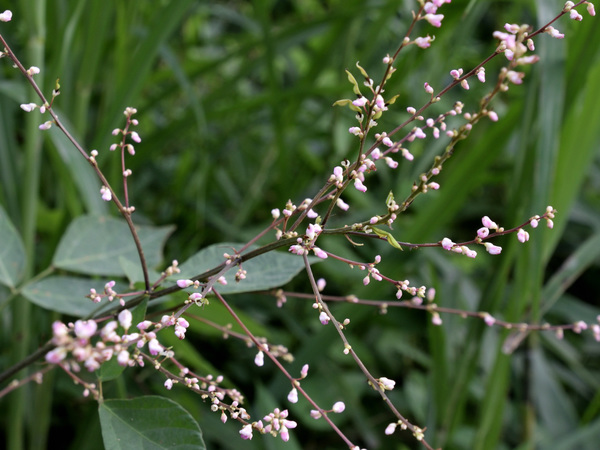
Pseudoracemose to pseudopaniculate inflorescences up to 30 cm long emerge from the stem tips and leaf axils, bearing sparse flowers.
The flowers are pale reddish-purple pea-shaped flowers 3–5 mm long.
The fruit is flat and usually constricted into 2–3 segments, each triangular.
The fruit surface has hooked hairs, and it is carried by clinging to clothing and animals.
[Notes]
There is a theory that the Japanese name comes from the shape of the fruit being likened to the footprints of a thief.