EVERGREEN

Plant Encyclopedia

Monarda

Monarda (genus, bee balm)

Japanese name: モナルダ
Scientific name: Monarda

Monarda

[Overview]
An annual or perennial.
The stem is square in cross section.
Leaves are simple and opposite, with entire or toothed margins.
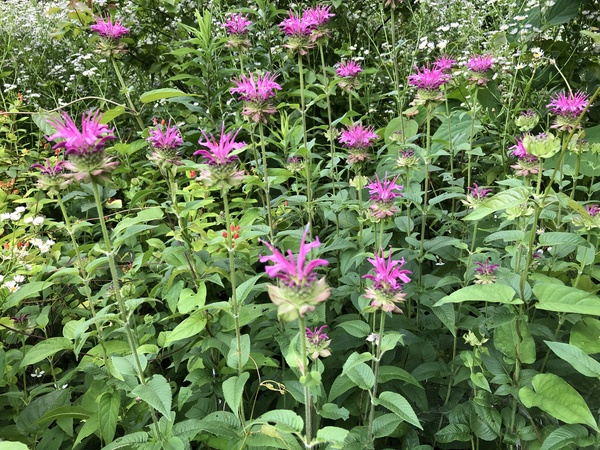
Verticillasters at the stem tips bear densely packed flowers.
The inflorescence has leaf-like bracts.
The corolla is divided into two lips, upper and lower, and there are 2 stamens that protrude far out.
The fruit is a schizocarp.

[Cultivation]
Propagate by division, from seed, or by shoot cuttings.
It prefers sunny, well-drained, well-ventilated, slightly moist soil.
It is very cold hardy.
For potted plants, water when the soil surface dries; for plants in the ground, rainfall is sufficient.
In spring and autumn, apply slow-release fertilizer placed on the soil.
Pests and diseases include powdery mildew, gray mold and aphids.

Details

Names
English: bee balm, horsemint, oswego tea
Japanese: モナルダ
Life form
Annual, Perennial
Habit
Terrestrial
Planting (or sowing) season
March, April, September, October
Flowering season
June, July, August, September
Distribution or origin
North America
Leaf shape
Simple leaf (unlobed)
Leaf arrangement
Opposite
Leaf margin
Entire, Serrate
Inflorescence
Verticillate cyme
Flower color
Red, Purple, Pink, White
Leaf color
Green
Availability of seeds and plants
Low
Form sold
Seedlings
Propagation
Seed, Division, Bud cuttings
Sun exposure
Full sun
Soil needs
Required
Tolerance
Cold tolerance
Suitable uses
Potted plant, Flower bed, Cut flowers, Parks and gardens
Diseases
Powdery mildew, Gray mold
Pests
Aphids
Japan Flower Trade Code
14419

Translated from our Japanese encyclopedia. If anything differs, the Japanese page is correct.

Sponsored