
Plant Encyclopedia

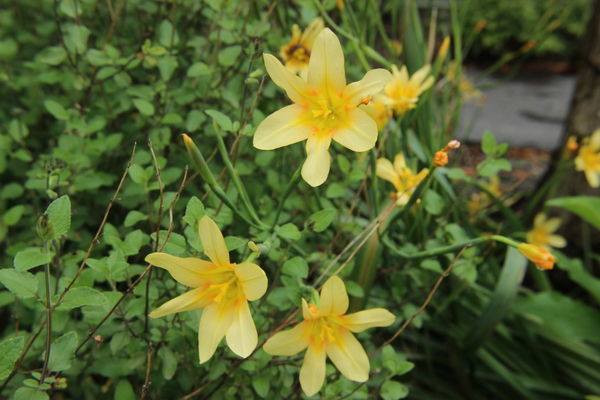
Homeria (genus, Cape tulip)
Japanese name: ホメリア
Scientific name: Homeria
[Overview]
A bulbous perennial.
The corm is enclosed in a hard outer coat.
The stem usually branches.
The leaves are basal and linear.
Flowers are borne at the branch tips, and each flower withers in a day.
The flowers have 6 tepals, all about the same size, opening flat or reflexed.
There are 3 stamens.
The stigma is 3-lobed.
The fruit is a capsule.
After flowering, the aboveground part dies back and the plant goes dormant.
[Cultivation]
Propagate from seed or by dividing the bulbs.
It can overwinter outdoors in regions without frost.
It prefers a sunny, well-drained site.
Take care not to overwater. From planting until flowering, water thoroughly when the soil dries; when the leaves begin to die back, gradually reduce watering, and stop watering during dormancy.
It can be left planted for 2–3 years.
If you dig up the bulbs, do so after the aboveground part has died back, and store them dry in the shade.
If base fertilizer is applied, nothing more is needed, but for potted plants, slow-release fertilizer may be applied until before flowering.
If you are not collecting seed, cut the flower stalk at its base after flowering so that the plant does not become exhausted.
There are no particular pests or diseases.
Details
Japanese: ホメリア
Translated from our Japanese encyclopedia. If anything differs, the Japanese page is correct.