
Plant Encyclopedia

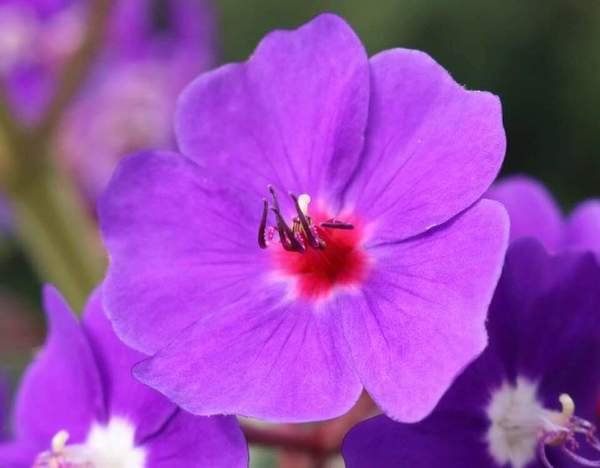
Tibouchina heteromalla (silverleafed princess flower, "Hozakinobotan")
Japanese name: ホザキノボタン (穂咲野牡丹)
Scientific name: Tibouchina heteromalla
[Overview]
An evergreen shrub 1–2 m tall.
The whole plant is hairy.
The leaves are simple and opposite, ovate, about 10–15 cm long and 8–11 cm wide, with conspicuous veins.
The leaves have a velvety texture, the underside is densely covered with white hairs, and the leaf margin is entire.
Many flowers are borne in panicles at the stem tips; they are purple, 5-petaled and 2–2.5 cm across.
Each flower is short-lived, but they bloom one after another.
There are 10 stamens.
The fruit is a capsule.
[Cultivation]
Propagate by cuttings, which root easily and can be taken at any time during the warm season.
In the Kansai region and south, if protected from frost, the aboveground parts die back but it sprouts again the next spring, so it can be grown in the open ground.
In cold regions, grow it in a pot and bring it indoors to a sunny spot.
It prefers a sunny, well-drained, fertile soil.
Avoid places that receive strong afternoon sun.
For potted plants, water thoroughly when the soil surface dries; for plants in the ground, rainfall is sufficient unless summer brings a long sunny, dry spell.
Take care not to let it dry out while it is in bloom.
In spring to autumn, apply slow-release fertilizer placed on the soil.
Flower buds form from summer onward, so finish pruning before summer; if pruning hard, finish it in spring at the start of the growing period, or flowering will be delayed.
Pests include aphids and spider mites.
Details
Japanese: ホザキノボタン(穂咲野牡丹)
Translated from our Japanese encyclopedia. If anything differs, the Japanese page is correct.