[Overview]
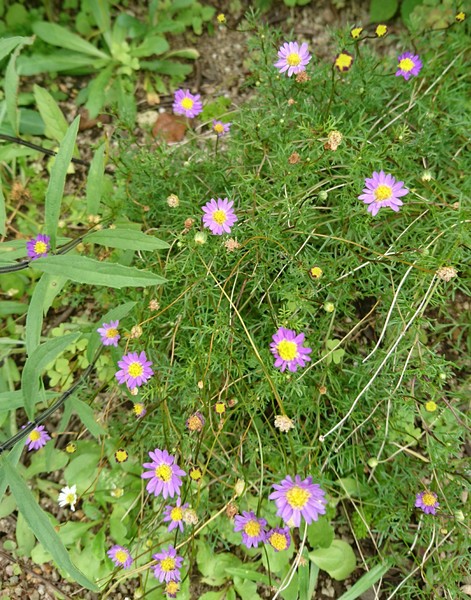
An annual or perennial.
The leaves are alternate or basal, and are either entire or variously lobed.
One to several flower heads are borne at the stem tip.
The flower heads consist of yellow tubular florets and ray florets in white, blue, pink and other colors.
The fruit is an achene.
[Cultivation]
Propagate from seed, by division, or from shoot cuttings.
It prefers sunny, fertile soil that is well drained and retains moisture well.
It is weak against both excess moisture and dryness.
In regions without frost it can overwinter outdoors.
A sunny place suits it from autumn to spring, and a cool, well-ventilated partial shade in summer.
For potted plants, water thoroughly when the soil surface dries; for plants in the ground, rainfall is sufficient.
Fertilizer is not particularly necessary for plants in the ground; for potted plants, give diluted liquid fertilizer.
Remove spent flowers frequently.
Cutting it back once before summer prevents stuffiness during the hot, humid season.
Pests and diseases include gray mold and powdery mildew.
[Notes]
Whether the scientific name should be Brachyscome (Burakisukome) or Brachycome (Burakikamu) still needs to be debated.