EVERGREEN

Plant Encyclopedia

Iresine

Iresine (genus, bloodleaf)

Japanese name: イレシネ
Scientific name: Iresine

Iresine

[Overview]
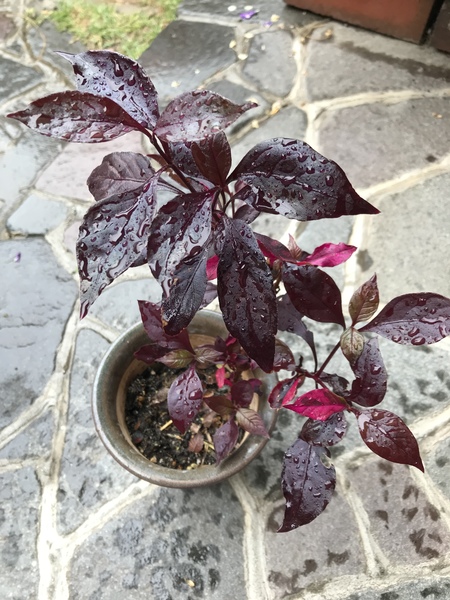
An evergreen perennial or subshrub.
The leaves are simple and opposite, come in various colors, and have entire margins.
The flowers are small, and the corolla is 5-lobed.
The fruit is a utricle.

[Cultivation]
Propagate by stem cuttings and division.
It prefers fertile soil in a sunny, well-drained site.
In poor sunlight the leaf color becomes poor.
In winter, bring it indoors to a bright place.
For potted plants, water thoroughly from spring to autumn when the soil surface dries, and keep on the dry side in winter; for plants in the ground, rainfall is sufficient.
From spring to autumn, apply slow-release chemical fertilizer placed on the soil.
Pests and diseases include powdery mildew, aphids and spider mites.

Details

Names
English: bloodleaf
Japanese: イレシネ
Life form
Perennial, Subshrub
Evergreen / deciduous
Evergreen
Habit
Terrestrial
Planting (or sowing) season
May, June
Foliage season
January, February, March, April, May, June, July, August, September, October, November, December
Distribution or origin
Tropical America
Leaf shape
Simple leaf (unlobed)
Leaf arrangement
Opposite
Leaf margin
Entire
Leaf color
Red, Yellow, Yellowish white, Green, Purple, Pink, Multicolor
Availability of seeds and plants
Low
Form sold
Seedlings
Propagation
Division, Bud cuttings
Sun exposure
Full sun
Water needs
Dry, Moderate
Soil needs
Required
Tolerance
Heat tolerance, Cold intolerance
Suitable uses
Potted plant, Flower bed, Container, Hanging basket
Diseases
Powdery mildew
Pests
Aphids, Spider mites
Japan Flower Trade Code
40745

Translated from our Japanese encyclopedia. If anything differs, the Japanese page is correct.

Sponsored