EVERGREEN

Plant Encyclopedia

Scabiosa

Scabiosa (genus, pincushion flowers)

Japanese name: スカビオサ
Scientific name: Scabiosa

Scabiosa

[Overview]
Annuals to subshrubs.
Many have soft hairs.
The leaves include basal leaves and leaves opposite on the stem.
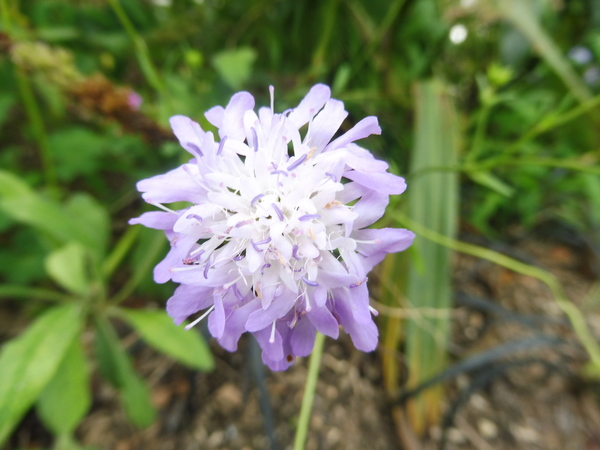
Capitula are borne at the branch tips.
The corolla is 5-lobed; the flowers in the center of the inflorescence are small and tubular, while those along the edge are strongly developed into two lips and spread outward.
The fruit consists of densely clustered achenes, with the calyx remaining.

[Cultivation]
Propagate from seed, by division, or by shoot cuttings.
Many prefer a cool climate, and the plants weaken in hot, humid conditions.
They prefer fertile soil in a sunny, well-drained site.
Species from Europe dislike acidic soil.
They tolerate dryness and dislike excess moisture, so for potted plants water thoroughly after the soil has dried, and for plants in the ground rainfall is sufficient.
If fertilizer is applied at planting, no further fertilizer is particularly needed, but potted plants may be given a small amount of slow-release fertilizer in spring and autumn.
Gray mold can occur.

Details

Names
English: pincushion flowers
Japanese: スカビオサ
Life form
Annual, Biennial, Perennial, Subshrub
Habit
Terrestrial
Planting (or sowing) season
March, April, September, October
Flowering season
April, May, June, July, August, September, October
Distribution or origin
Europe, Asia, Africa
Leaf shape
Lobed leaf
Leaf arrangement
Opposite, Basal
Leaf margin
Entire, Incised
Leaf notes
There are basal leaves and stem leaves.
Inflorescence
Head
Flower color
Red, Yellow, Blue, Purple, Pink, White
Leaf color
Green
Availability of seeds and plants
Low
Form sold
Seeds, Seedlings
Propagation
Seed, Division, Bud cuttings
Sun exposure
Full sun
Water needs
Dry, Moderate
Soil needs
Required
Soil acidity
Alkaline, Neutral
Suitable uses
Ground cover, Potted plant, Flower bed, Cut flowers, Parks and gardens, Container
Diseases
Gray mold
Japan Flower Trade Code
14347

Translated from our Japanese encyclopedia. If anything differs, the Japanese page is correct.

Sponsored