
Plant Encyclopedia

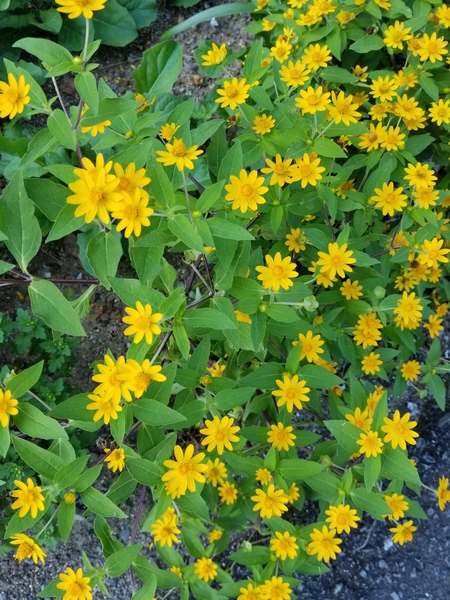
Melampodium (genus, blackfoots)
Japanese name: メランポディウム
Scientific name: Melampodium
[Overview]
An annual or perennial, or a subshrub.
Even the perennial types are treated in Japan as spring-sown annuals.
The stem branches well.
The leaves are simple and opposite, linear to ovate, thin, and dry in texture.
The flowers are borne in flower heads about 2–3 cm across; the ray florets around the edge are white to yellow, about 10 in number, and the tubular florets in the center are yellowish green to yellowish orange.
The fruit is an achene.
[Cultivation]
Propagate from seed.
It prefers sunny, well-drained, well-ventilated, fertile soil, but it grows even with little fertilizer.
It tolerates heat and humidity well, and is weak against cold and dryness.
For plants in the ground, avoid places that become very dry.
For potted plants, water thoroughly when the soil surface begins to dry.
For plants in the ground, rainfall is sufficient except when sunny weather continues and the soil becomes severely dry.
Too much fertilizer makes the plant leggy and weak, so for plants in the ground no fertilizer other than base fertilizer is particularly needed; for potted plants, during the growing period apply slow-release chemical fertilizer with equal parts of the three components once a month, or give diluted liquid fertilizer once every 10 days to 2 weeks.
Fertilizer high in nitrogen produces only leaves and poor flowering.
Pests include spider mites and aphids.
Details
Japanese: メランポディウム
Translated from our Japanese encyclopedia. If anything differs, the Japanese page is correct.