
Plant Encyclopedia

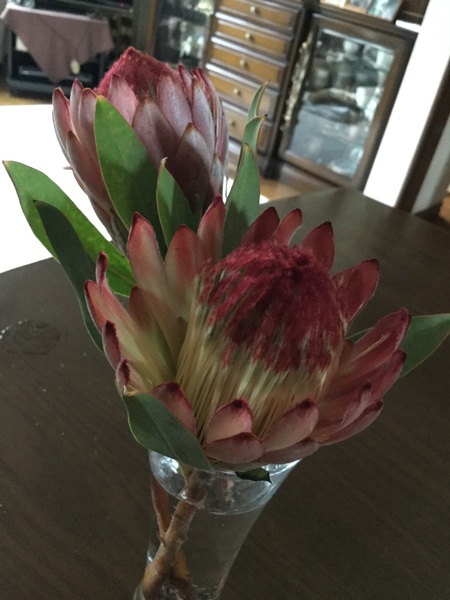
Protea (genus, sugarbushes)
Japanese name: プロテア
Scientific name: Protea
[Overview]
An evergreen shrub to tall tree.
The leaves are simple, alternate, thick and leathery.
A large capitate inflorescence is borne singly at the tip of a branch and carries many small flowers, but the colored involucre surrounding the inflorescence is more conspicuous.
The fruit is a nut.
[Uses]
The large inflorescences are showy and long-lasting, so they are used for fresh cut flowers and dried flowers.
[Cultivation]
Propagate from seed or by cuttings.
The germination rate is relatively high, but it takes several years to flower.
It can overwinter outdoors in regions without frost.
It prefers sunny, well-drained, well-ventilated poor soil, and most species prefer acidic soil.
The roots are shallow and prone to drying out, so it needs moisture, but it tolerates dryness and dislikes heat and humidity; for potted plants, water thoroughly when the soil surface dries in spring and autumn, and keep on the dry side in midsummer and winter.
For plants in the ground, rainfall is sufficient.
Fertilizer is not needed for ordinary home cultivation, and too much will kill the plant; it is especially sensitive to phosphate and nitrate nitrogen.
If fertilizing, use a small amount of potassium, and for nitrogen apply ammonium sulfate at about 5 kg/10 a, about three times a year.
Avoid cutting flowers while the leaves are wet, such as during or after rain, as the leaves often turn black.
There are no particular pests or diseases.
Details
Japanese: プロテア
Translated from our Japanese encyclopedia. If anything differs, the Japanese page is correct.