
Plant Encyclopedia

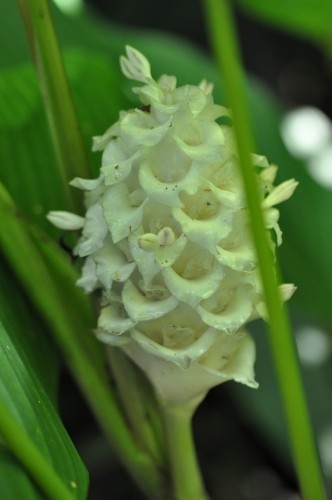
Calathea (genus)
Japanese name: カラテア
Scientific name: Calathea
[Overview]
A perennial.
The stems usually creep and do not stand upright.
The leaves grow from the base in clumps and have various patterns depending on the species.
The flowers are borne in spikes to racemes, and the inflorescence is usually shorter than the leaves.
The flowers emerge from between the bracts, and the stamens, which develop greatly into petal-like structures, are conspicuous.
The fruit is a capsule.
[Cultivation]
Propagate by division or stem cuttings.
It prefers well-drained soil rich in humus.
It may also be planted in sphagnum moss alone.
Keep it in bright shade.
In direct sunlight, the leaves scorch or curl.
In shade, on the other hand, the color becomes poor.
The ideal temperature for growth is 25–30 degrees; it prefers heat and humidity, and needs 10 degrees or more to overwinter.
When the temperature drops, root rot occurs.
From spring to autumn, water thoroughly when the soil surface dries; in winter, keep it on the dry side.
If the soil becomes too dry, spider mites appear.
It also prefers high humidity in the air.
From spring to autumn, apply slow-release chemical fertilizer once every 2 months.
Pests and diseases include black spot, leaf spot, scale insects and spider mites.
Details
Translated from our Japanese encyclopedia. If anything differs, the Japanese page is correct.