EVERGREEN

Plant Encyclopedia

Itea virginica

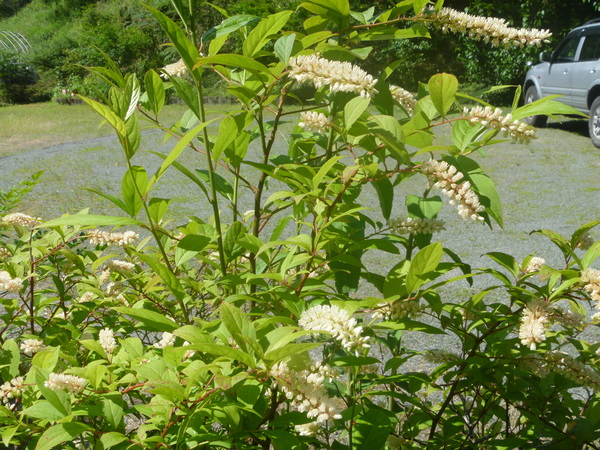
Itea virginica (Virginia sweetspire, "Kobanozuina")

Japanese name: コバノズイナ (小葉瑞菜)
Scientific name: Itea virginica

Itea virginica

[Overview]
A deciduous shrub about 1–2 m tall.
The leaves are simple and alternate, elliptic to obovate, 5–12 cm long, with fine spiny serrations on the margins.
White hairs grow on the veins on the underside of the leaves.
The leaves turn red in autumn.
Racemes about 10 cm long emerge at the branch tips or leaf axils and bear many flowers densely.
The flowers are cream-colored, 5-petaled, about 1 cm across, and fragrant.
The fruit is a capsule that splits open along vertical grooves when ripe.

[History]
It arrived in Japan in the early Meiji era.

[Cultivation]
Propagate from seed or by cuttings.
It prefers sun to partial shade and dislikes dryness.
It is hardy, tolerating both cold and heat.

Details

Names
English: Virginia sweetspire, Virginia willow, tassel-white
Japanese: コバノズイナ(小葉瑞菜)
Life form
Shrub
Evergreen / deciduous
Deciduous
Leaf type
Broadleaf
Habit
Terrestrial
Planting (or sowing) season
March, April, November, December
Flowering season
May, June
Distribution or origin
Eastern North America
Growth form
Branching
Height
1000–2000 mm
Leaf shape
Simple leaf (unlobed)
Leaf arrangement
Alternate
Leaf margin
Serrate
Inflorescence
Raceme
Number of petals
5
Flower color
Yellowish white
Flower diameter
10
Inflorescence length
100
Leaf color
Green, Red
Availability of seeds and plants
Low
Form sold
Seedlings
Propagation
Seed, Cuttings
Sun exposure
Full sun, Partial shade
Water needs
Moderate
Soil needs
Required
Tolerance
Cold tolerance, Heat tolerance
Suitable uses
Flower bed, Parks and gardens, Container
Japan Flower Trade Code
61677

Translated from our Japanese encyclopedia. If anything differs, the Japanese page is correct.

Sponsored